The Lingoberry Blog
Language-learning tips, culture, and stories from Pip
To be, or to be? The quiet philosophy of ser and estar
Every time you say "is" in Spanish, you're taking a philosophical position: ser asks what something fundamentally is, estar asks how it currently exists. Master that distinction and the exceptions stop feeling like exceptions.

Finnish has no future tense — so how does anyone make plans?
Finnish has no future tense. None. So how does an entire nation plan holidays, book appointments, and promise to pay you back? The answer makes English look like the strange one.

The B1 trap: why you feel stuck at intermediate (and how to break free)
Most language learners hit a wall around B1 — and there's a mathematical reason why. Here's what Zipf's Law tells us about the intermediate plateau, and four concrete steps to break through it.

How good is AI at teaching languages?
Large Language Models don't learn languages the way humans do — they don't feel, desire, or grow from experience. But understanding how they actually work under the hood might make you a better language learner.
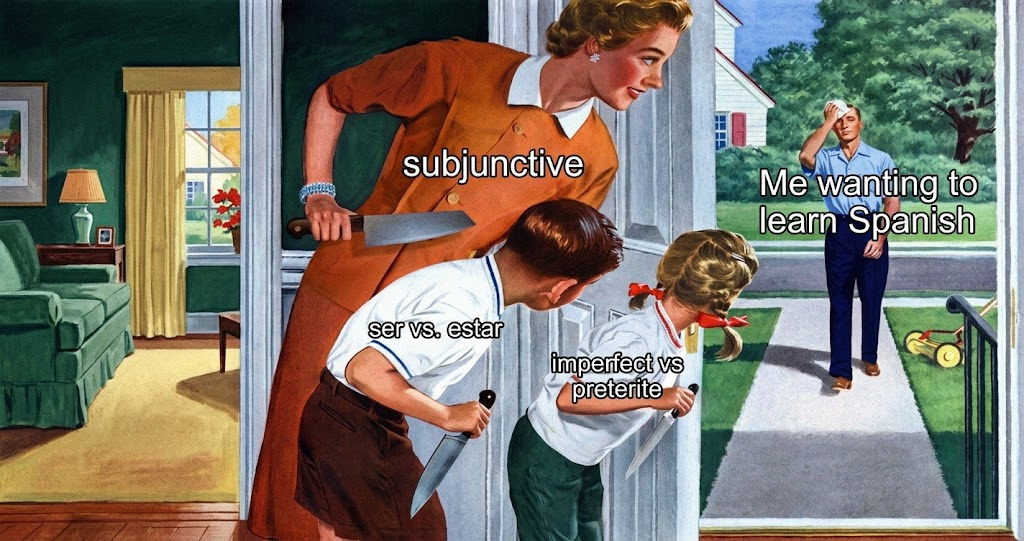
Myth: Spanish is an easy language to learn
Spanish is often called the easiest language for English speakers. But between its not-quite-phonetic spelling, 16 verb tenses, and grammar concepts that don't exist in English, "accessible" might be a better word than "easy."