
About Lingoberry
A language-learning app that asks you to actually produce the language — then explains what you got right and what you didn't.
How it started
Lingoberry was built out of frustration. After years of using apps that felt more like gamified flashcard drills than actual language practice, the founder hit a ceiling at B1 Spanish that none of them could help break through. The problem wasn't motivation — it was that recognising vocabulary in multiple-choice questions is nothing like constructing a sentence from scratch.
So Lingoberry was built around one idea: make you produce the language, every session, at your level, with feedback that explains the reasoning rather than just marking you right or wrong. Read the full origin story →

Meet Pip
Pip is a fairy-like lingonberry character — encouraging, playful, and quietly obsessed with languages. Pip writes every exercise, gives every piece of feedback, and has a habit of pointing out the linguistic curveballs that make a language worth learning. Not a blueberry. Very much a lingonberry.
See it in action
Seven exercise types, all with detailed feedback from Pip.
They range from high-effort exercises — where you produce language freely from scratch and get the most out of each session — down to low-effort drills. The high-effort exercises reward a focused session; the low-effort ones are good for a quick drill or when you're short on time.
Conversation
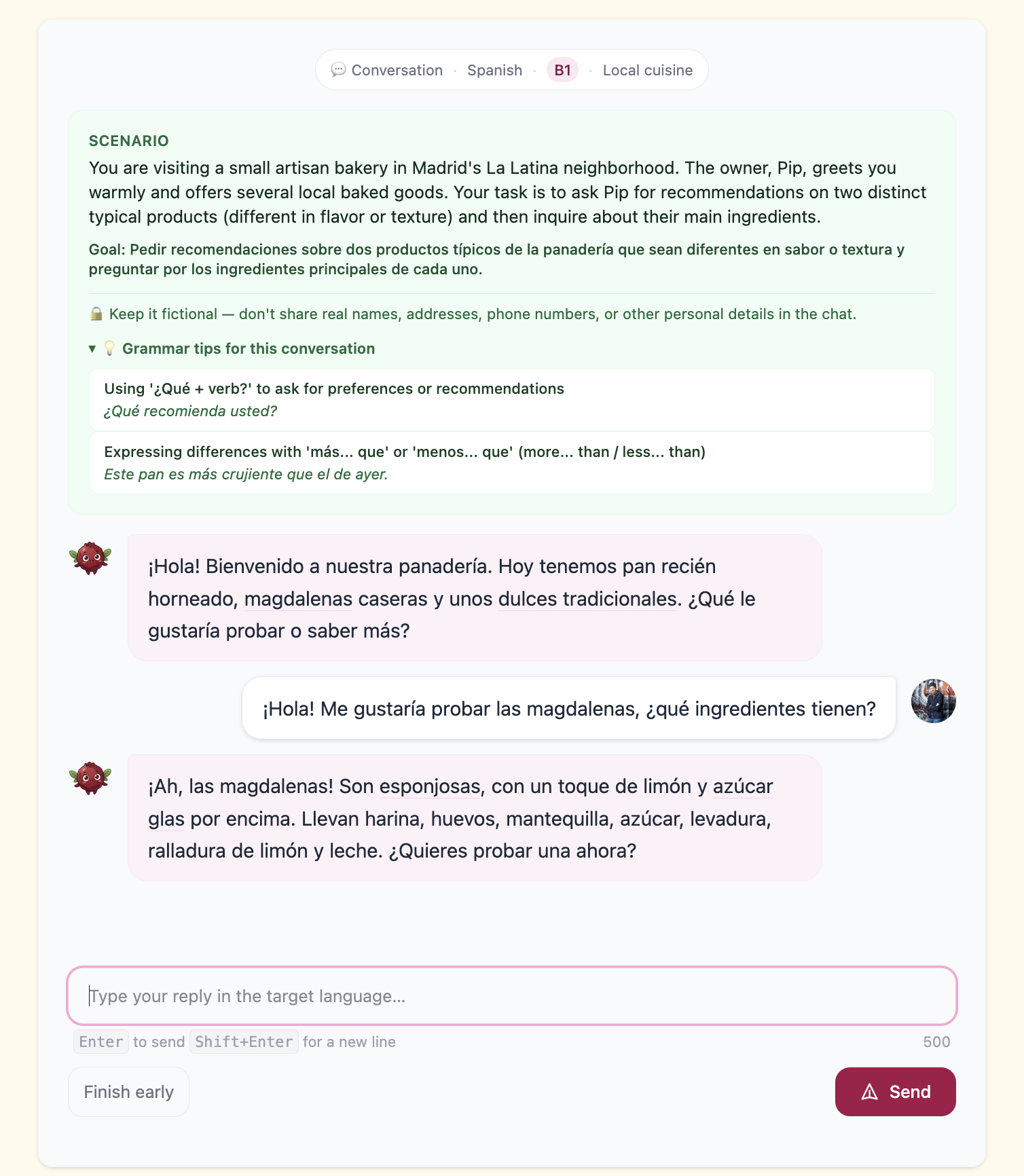
Pip plays a role — market vendor, pharmacist, tour guide — and you converse freely around a scenario. Real back-and-forth in the language, not a scripted drill.
Translation
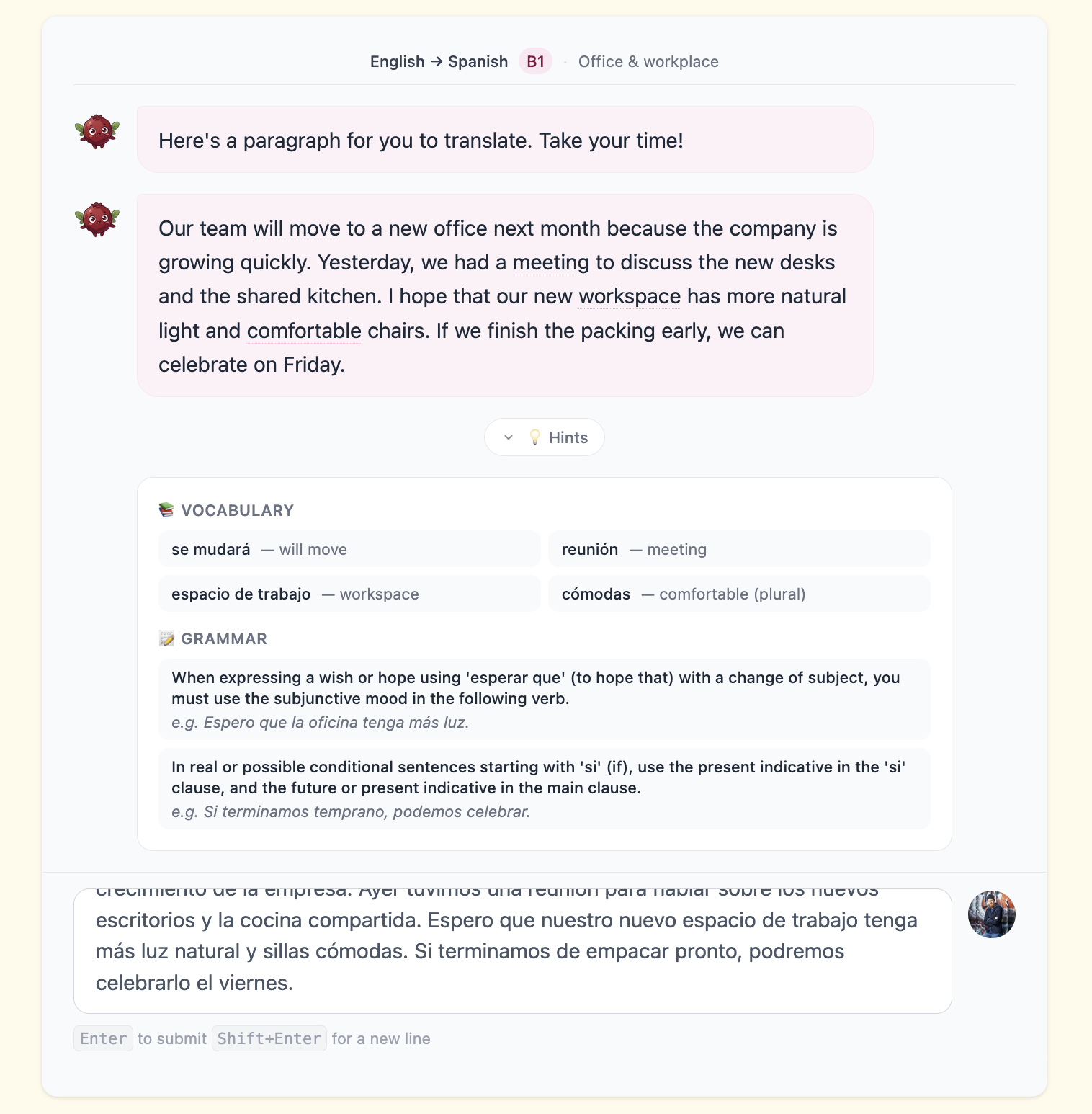
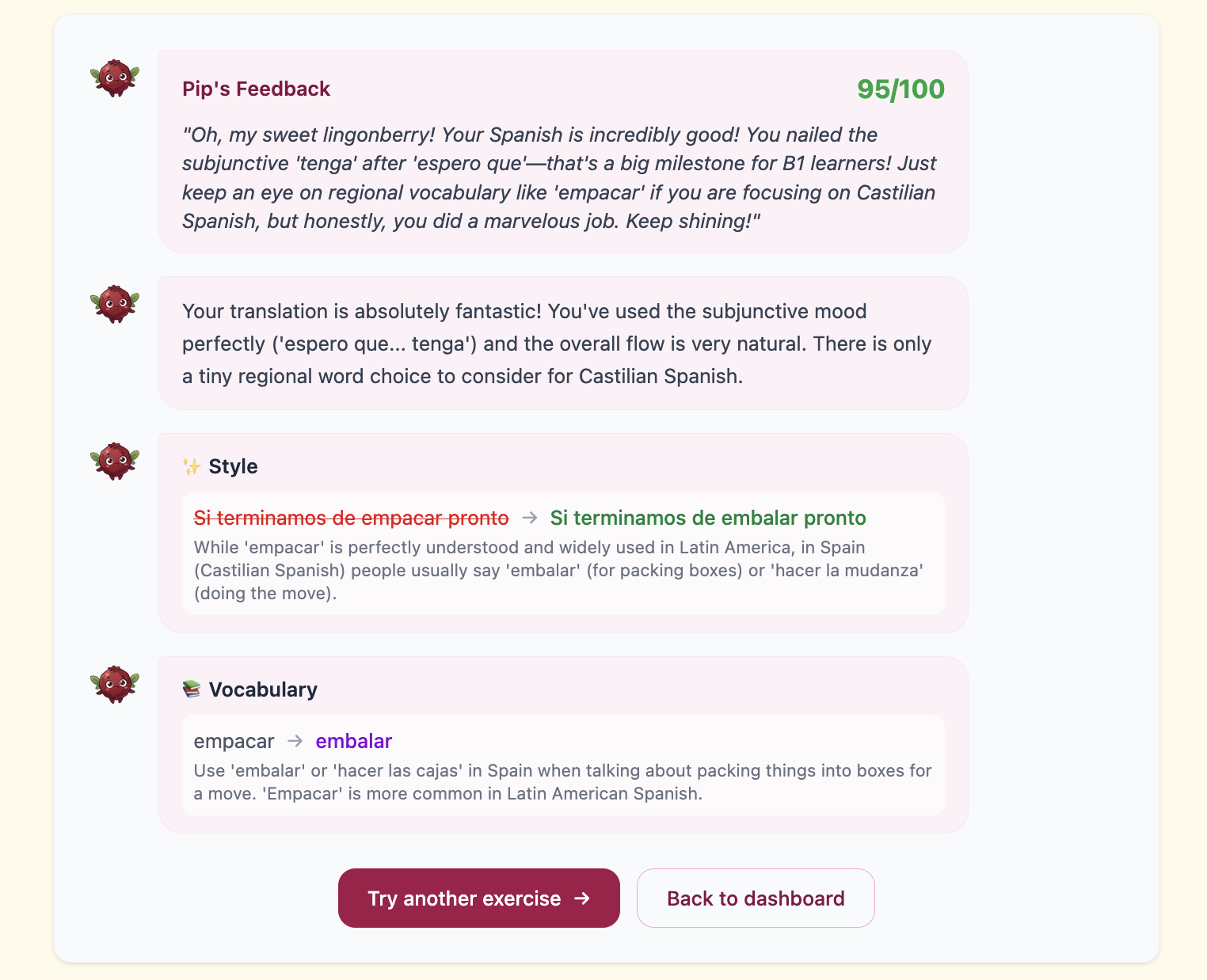
Pip writes a paragraph on any topic you choose. You translate it. The feedback breaks down grammar, word choice, and naturalness — not just a score.
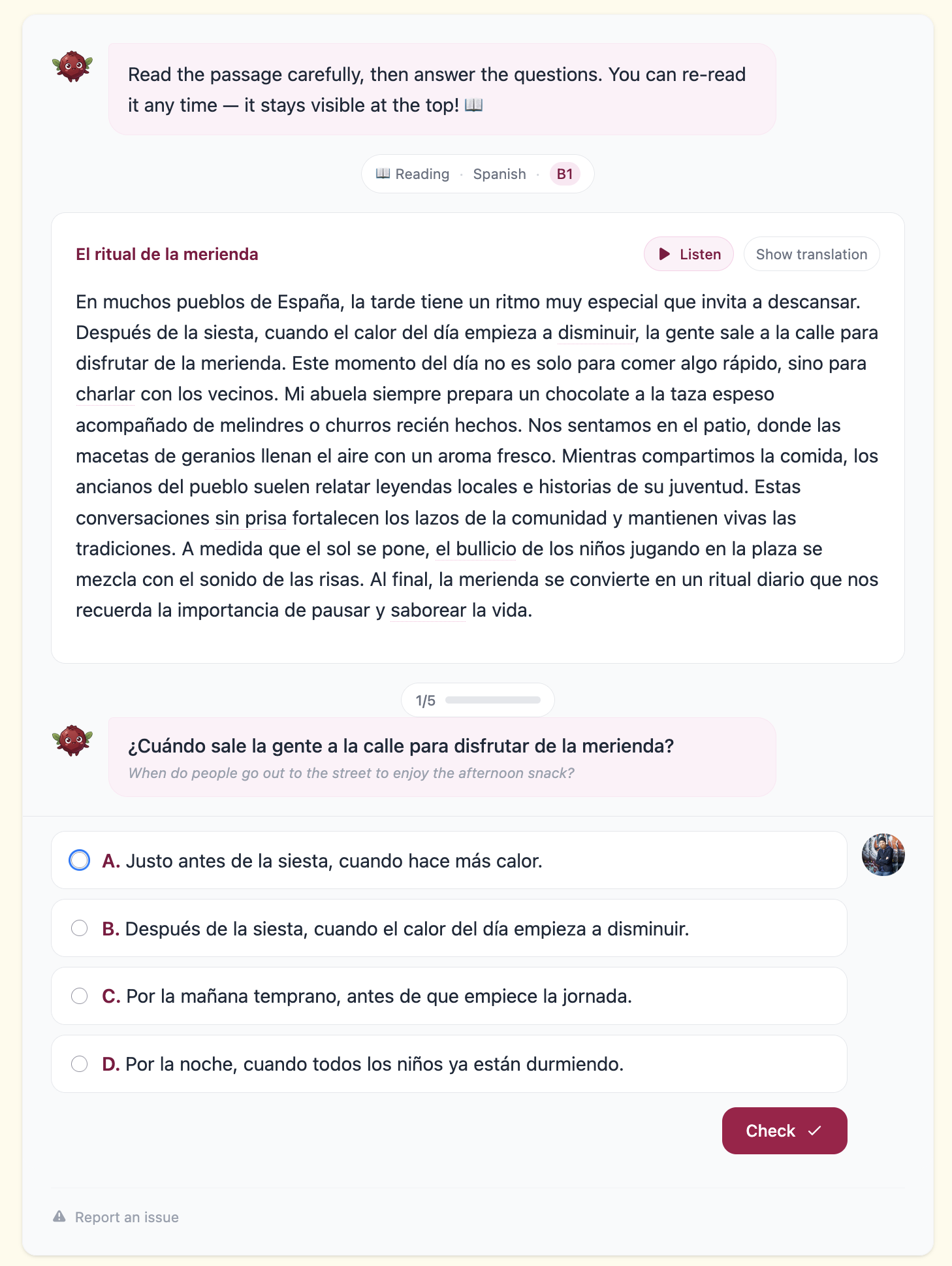
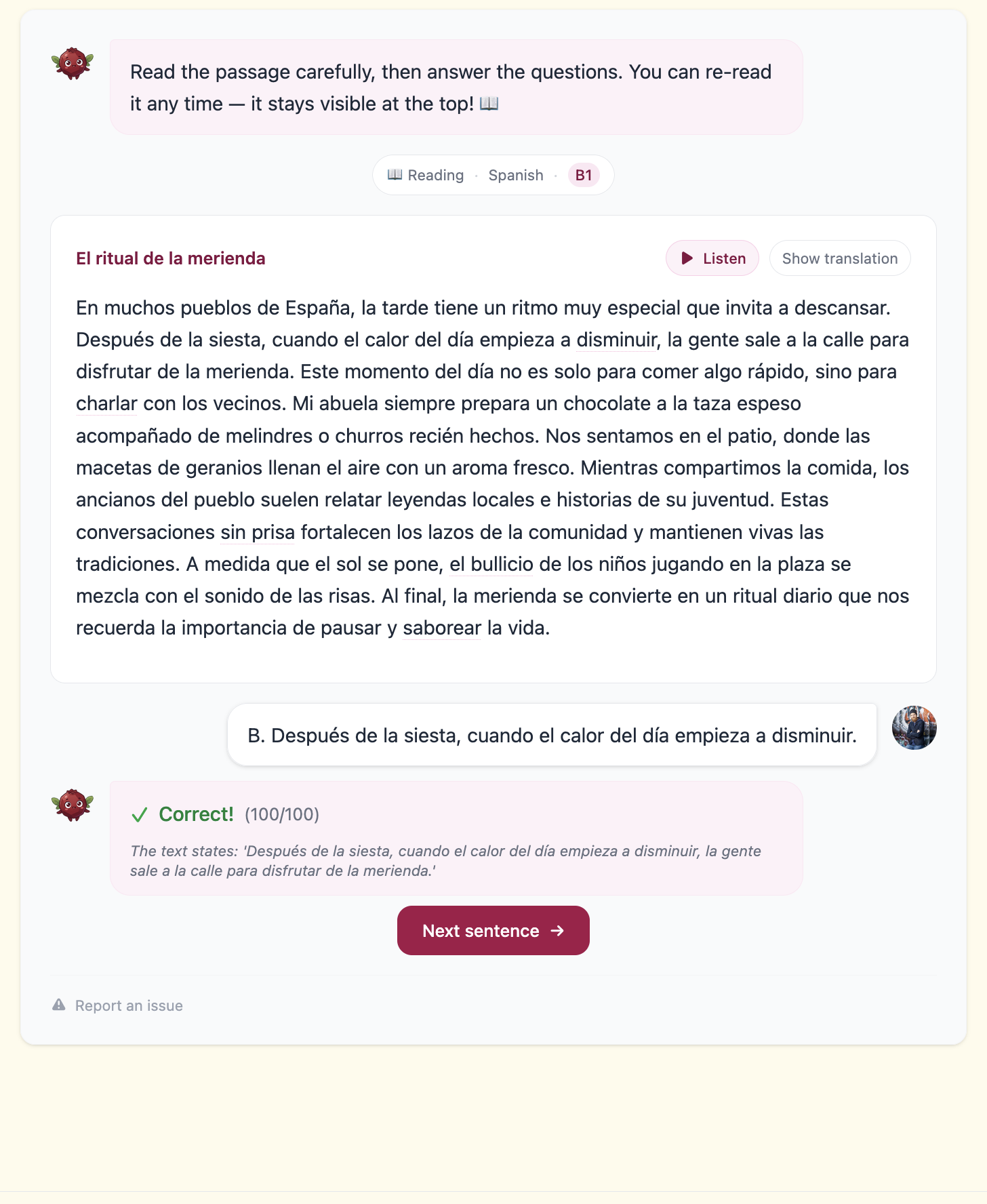
Reading comprehension
A passage at your CEFR level followed by comprehension questions — the exercise that shows whether you understood the text or just recognised the words.
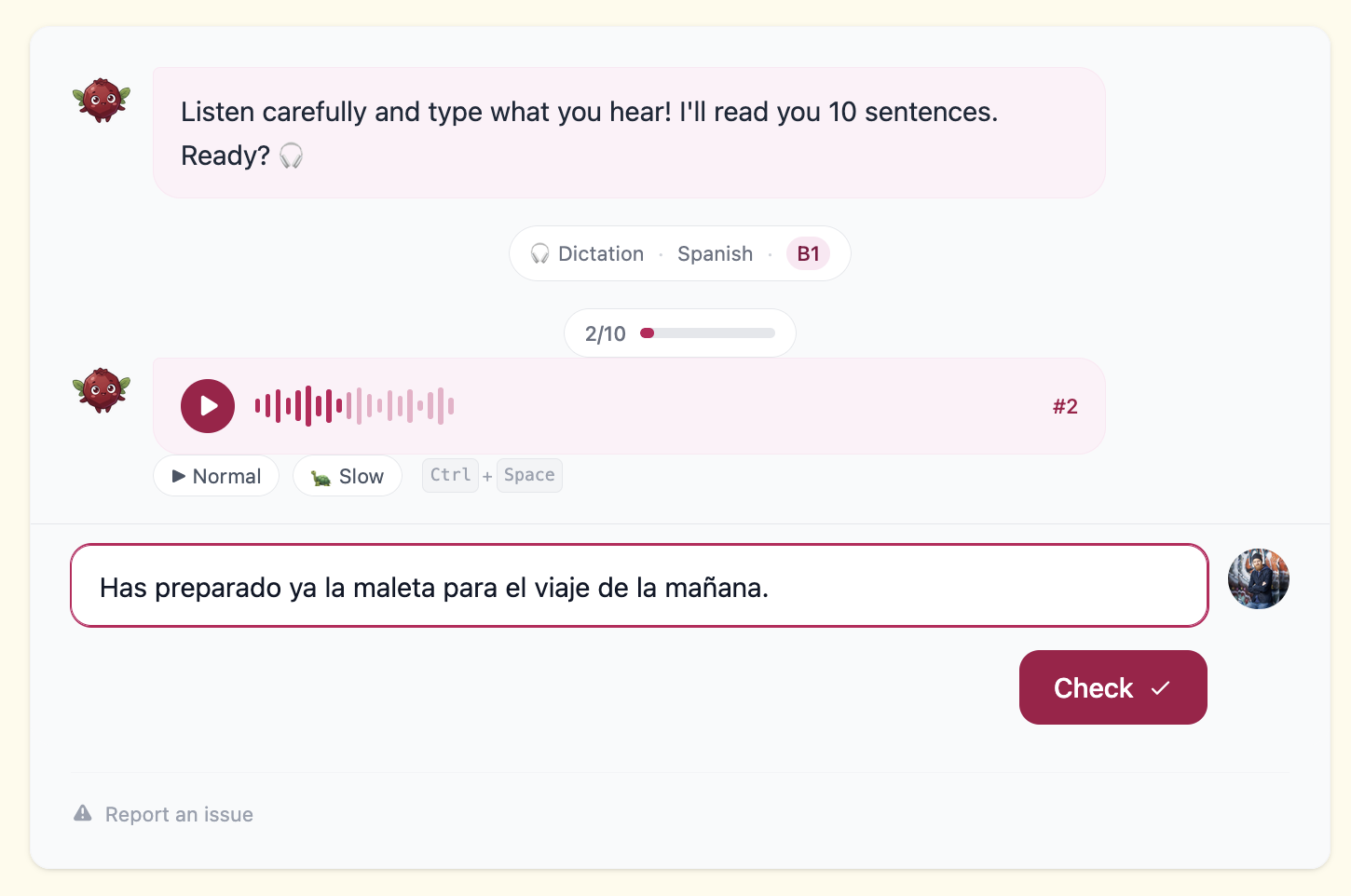
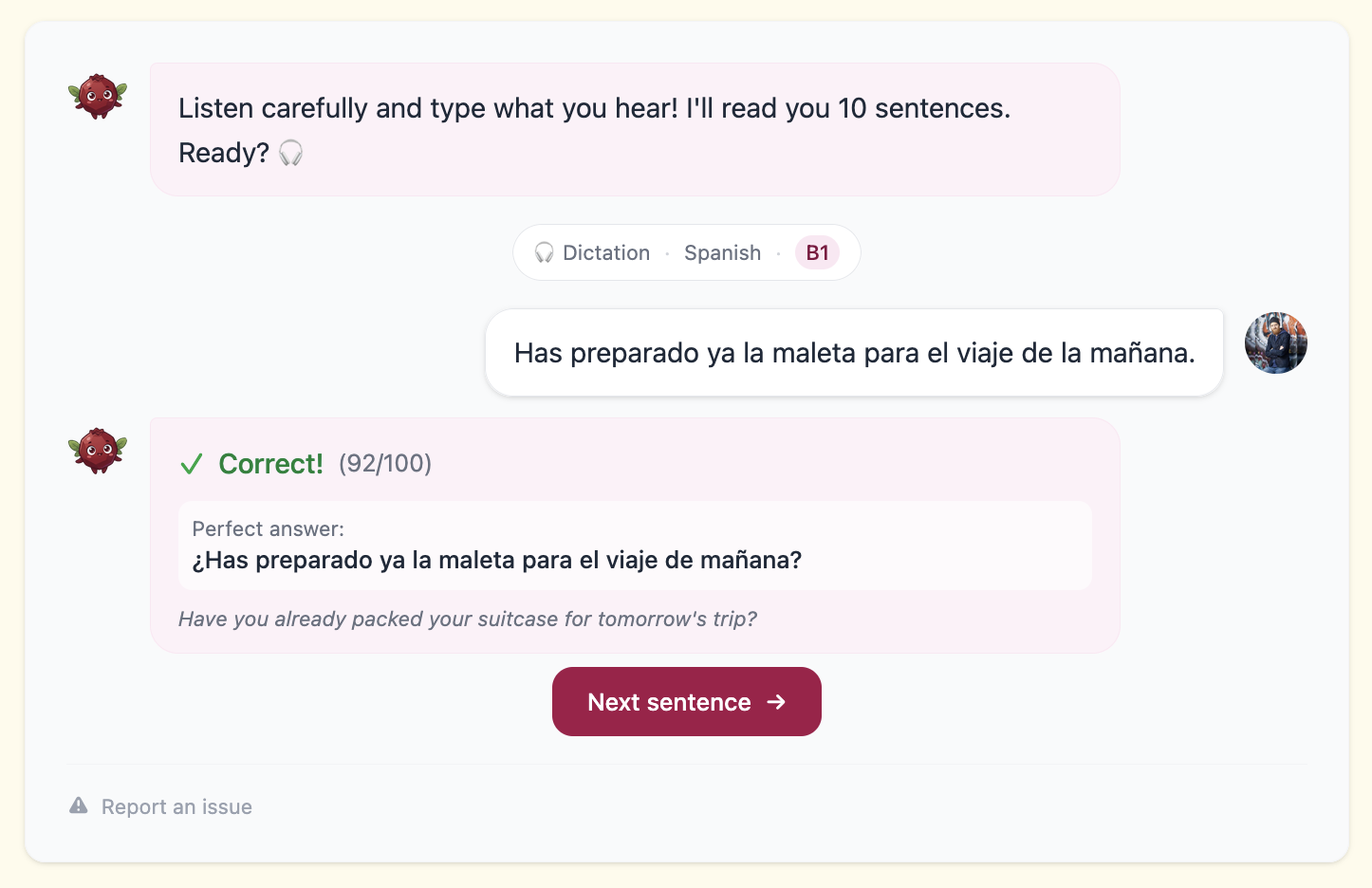
Dictation
Listen to a sentence and type what you hear. Scored word by word so you can see exactly where your ear slipped — the endings, the articles, the words that blur together in speech.
Speaking
Listen to a sentence, then speak it aloud. Your pronunciation is checked against what was expected — a quick way to practise saying whole phrases rather than just reading them. Works in browsers that support speech recognition (Chrome, Edge, Safari).
Fill in the blank
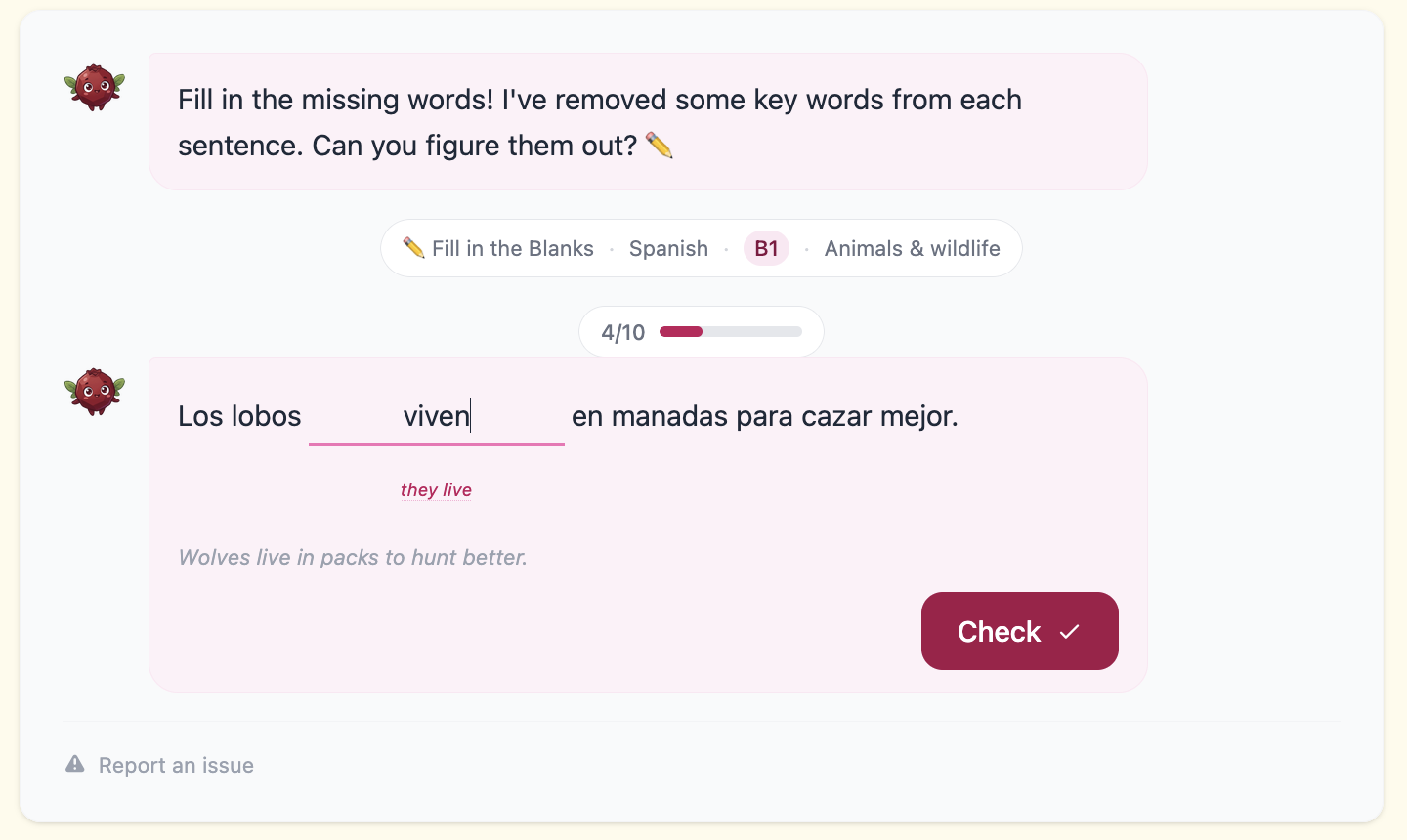
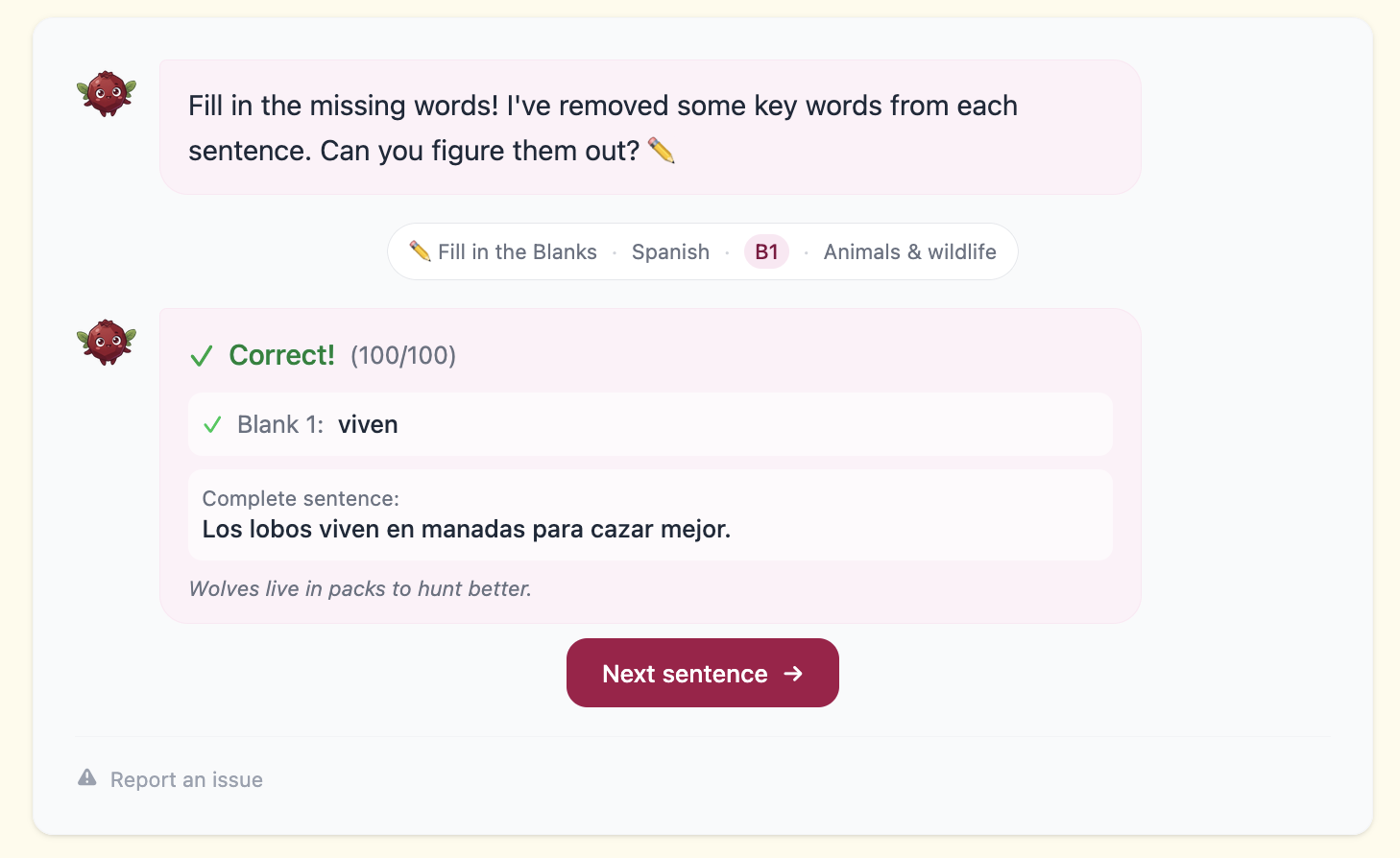
A sentence with key words removed, with the base form as a hint when you need one. Good for drilling the endings a language expects you to produce without thinking.
Word Bank
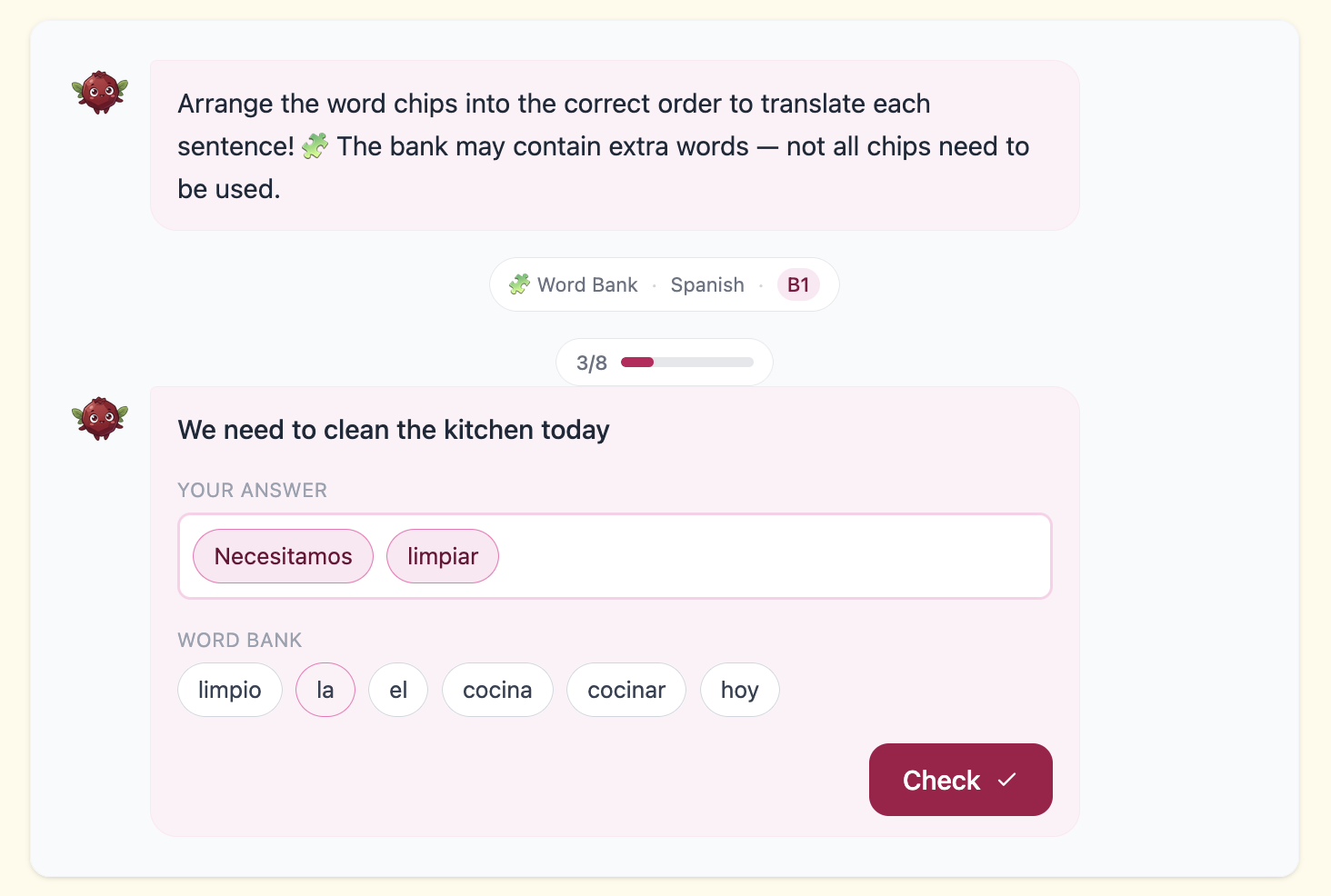
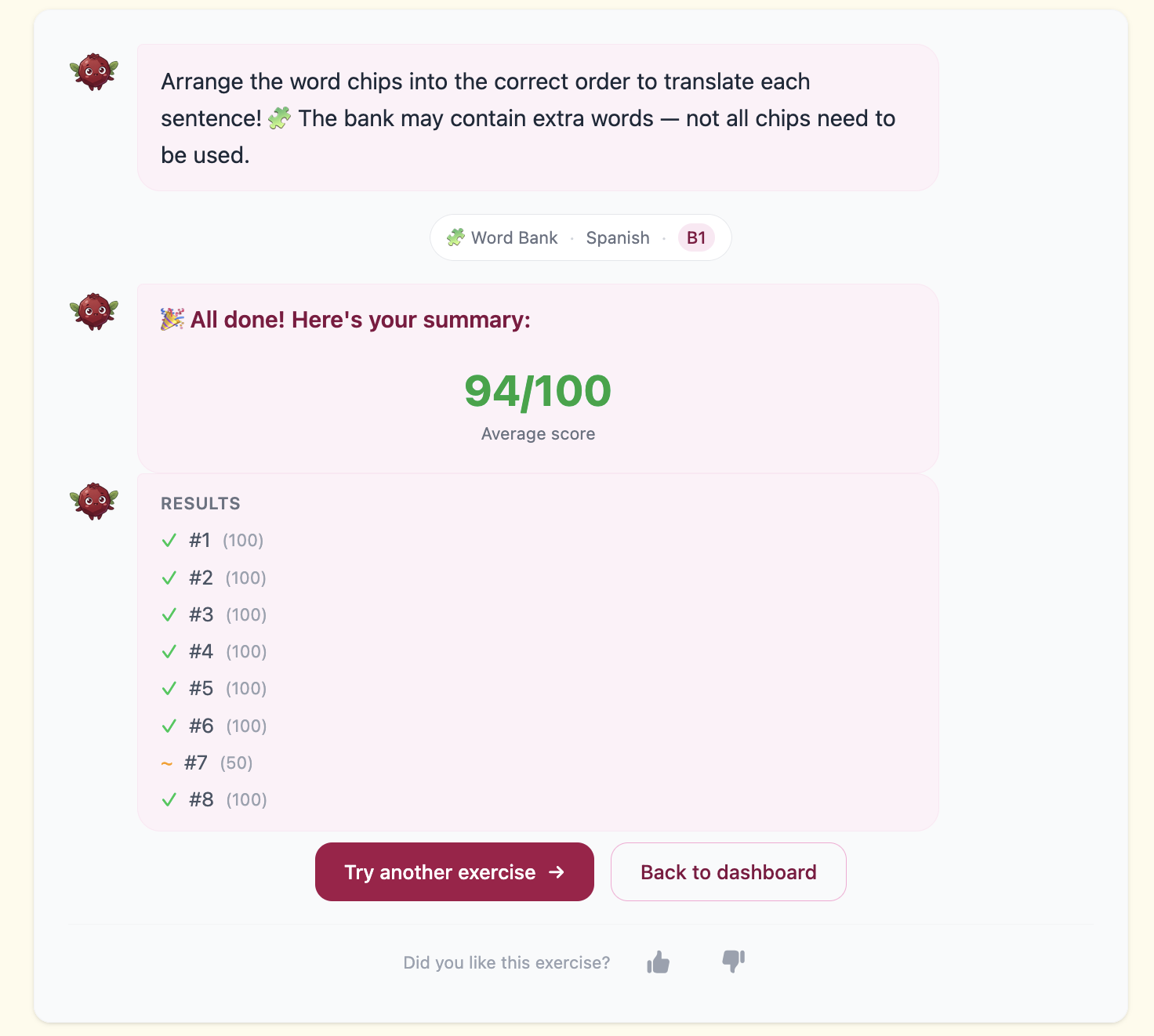
Reconstruct a translation by tapping word chips into the right order. No typing — just recognition and word order. The bank may include extra distractor words to keep you honest. A good warm-up or wind-down when you want something lower-effort.
Feedback that explains itself
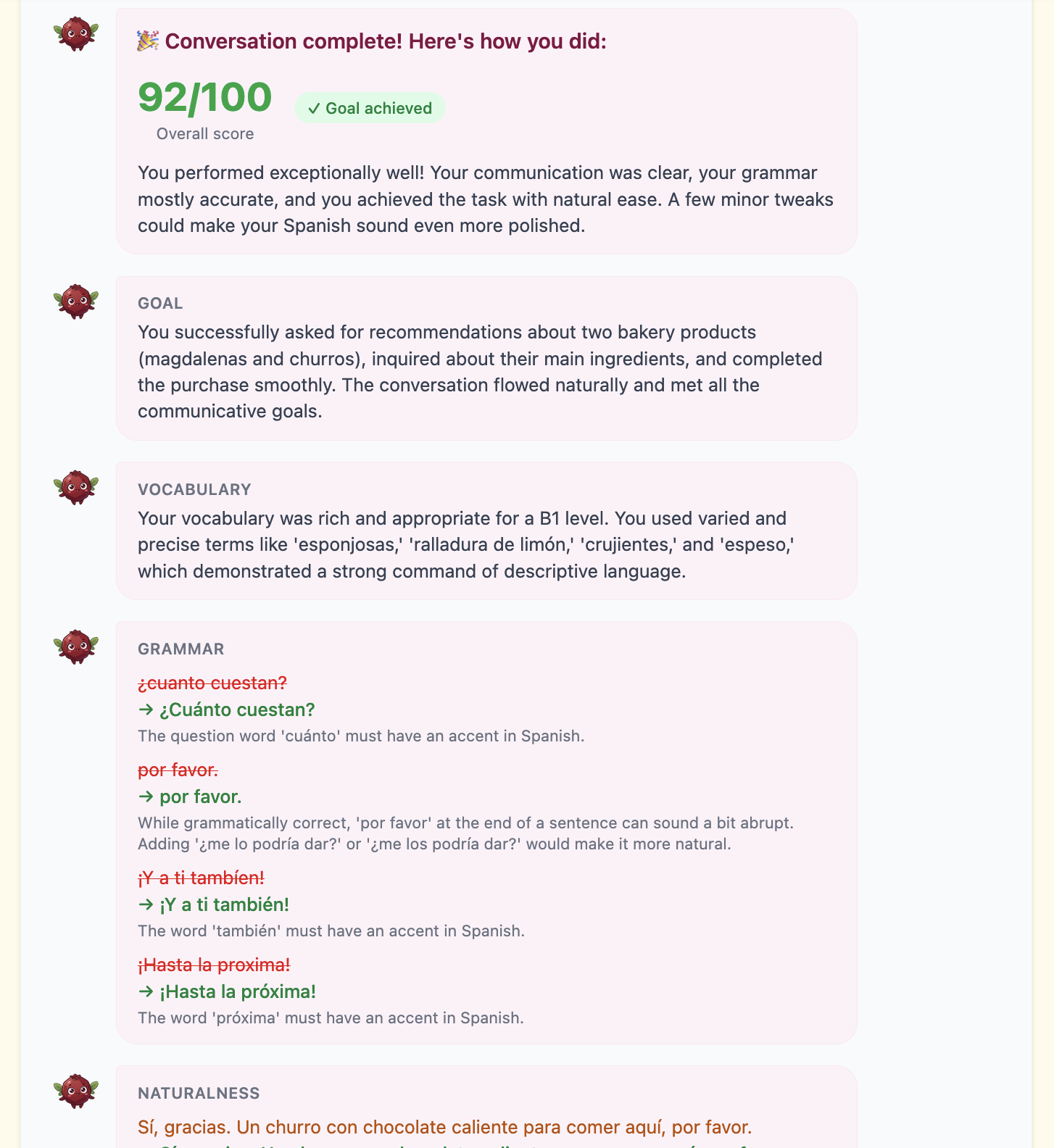
Most language apps tell you "incorrect" and move on. Lingoberry shows you the corrected version, explains why each change was made, flags anything that sounds unnatural to a native speaker, and gives you a score that reflects what actually matters — accuracy, grammar, and naturalness, not just spelling.
What makes it different
Your level, per language
Content is pitched to your CEFR level (A1–C2) and adjusts as you improve. Learning two languages at different levels? Each one keeps its own.
A short list of languages we can vouch for
We offer a curated set of language pairs rather than every combination we could technically generate. Each one has a natural-sounding voice for dictation and output we can verify.
First Steps for beginners
New to the language? The guided onboarding path introduces vocabulary, recognition, matching, and production in sequence before sending you into freeform exercises.
Terra Quiz
A geography mini-game where you identify countries on a map — publicly playable, no account needed. A small side adventure for when you want a break from grammar.
About the author

Hi, I'm Juha — a software engineer and language-learning enthusiast who got frustrated hitting the B1 wall with Spanish and decided to build my way out of it. When I'm not coding, I'm running after my hyperactive five-year-old, playing guitar, or occasionally doing some photography. You'll probably spot me on the leaderboard. ❤️
Follow Lingoberry
Stay in the loop with tips, updates, and the occasional berry pun.
Have questions?
Find answers to common questions about Lingoberry, exercises, and pricing.
Read the FAQ →Free to try — no card needed.