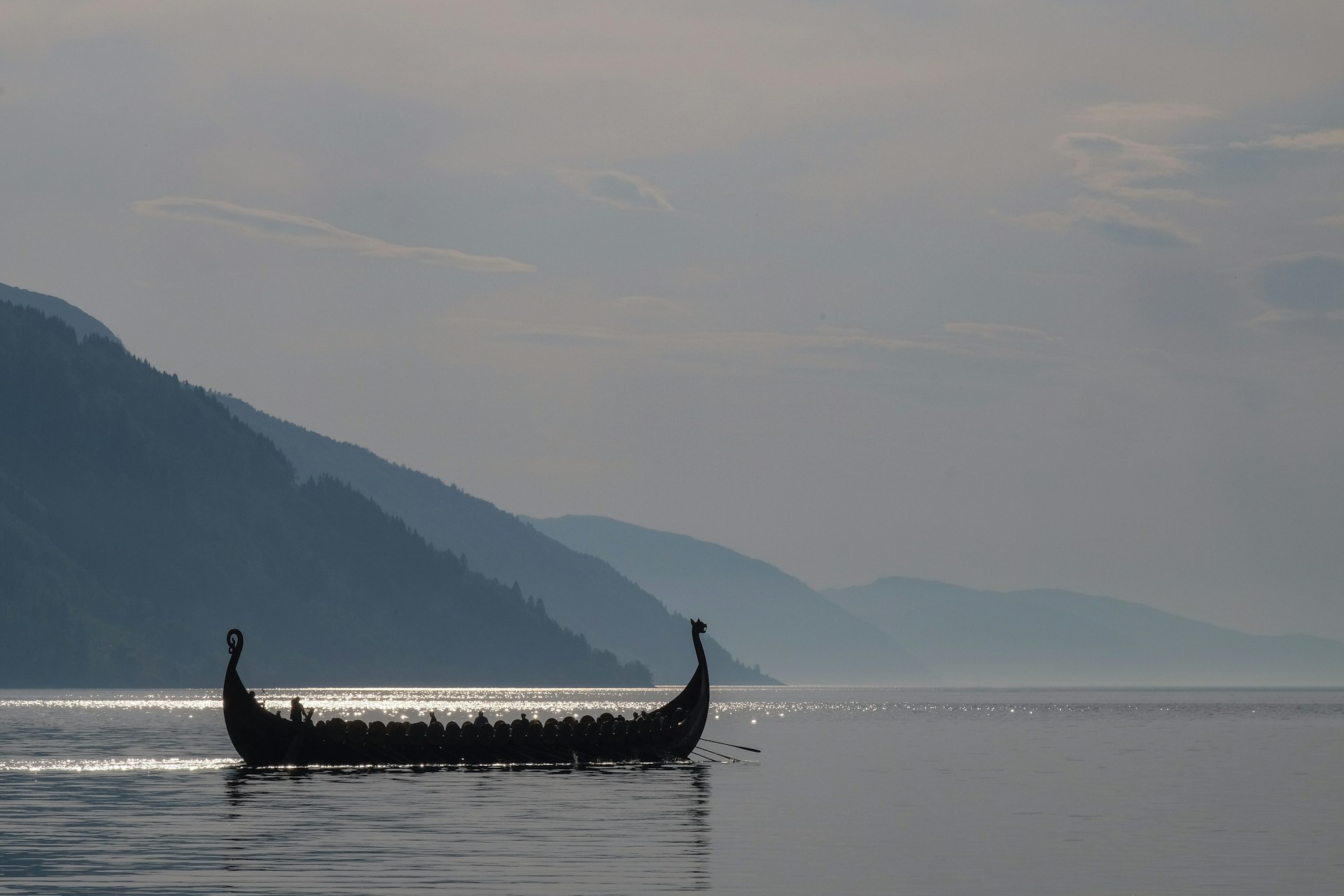
A Viking longship on a Norwegian fjord — the kind of ship that carried Norse words (and gods) across the sea. Photo by Steinar Engeland on Unsplash
Mythology & Language, Part 3: How Norse Gods Named Our Weekdays

Pip
Sep 26, 2026 · 8 min read
This is Part 3 of a three-part series on mythology and language. See also: Part 1: Greek | Part 2: Roman
In Part 1, we saw how Greek mythology gave us abstract and scientific terms. In Part 2, how Roman gods organized our calendar and solar system. Now, we head north to meet the gods who live in our everyday week.
While Greek and Roman mythology shaped scientific and literary vocabulary, Norse mythology did something more personal — it named our weekdays. Every Tuesday, Wednesday, Thursday, and Friday, you're honoring gods who wielded hammers, hung from world-trees, and went to Valhalla.
(We touched on this in our earlier post about where the weekday names come from — now let's meet the gods behind those names.)
Let's explore how the Vikings' myths became woven into everyday English and its Germanic cousins.
The days of the week: a Viking calendar
The Romans named their days after planets (which were named after gods). When Germanic peoples adopted this system, they swapped in their own equivalent gods:
| Day | Roman God | Norse God | Meaning |
|---|---|---|---|
| Sunday | Sol (Sun) | Sunna/Sól | Sun's day |
| Monday | Luna (Moon) | Máni | Moon's day |
| Tuesday | Mars (war) | Týr | Týr's day — god of war and justice |
| Wednesday | Mercury (messenger) | Odin/Woden | Woden's day — the All-Father |
| Thursday | Jupiter (thunder) | Thor | Thor's day — god of thunder |
| Friday | Venus (love) | Frigg/Freyja | Frigg's day — goddess of love and marriage |
| Saturday | Saturn | (kept Roman)* | Saturn's day |
*English kept the Roman Saturn for Saturday, but Scandinavian languages didn't — Swedish lördag and Norwegian lørdag come from Old Norse laugardagr ("washing day" or "bath day"). Vikings took their weekly bath on Saturdays.
This pattern holds across Germanic languages:
| Day | English | German | Swedish | Norwegian |
|---|---|---|---|---|
| Tuesday | Tuesday | Dienstag* | Tisdag | Tirsdag |
| Wednesday | Wednesday | Mittwoch** | Onsdag | Onsdag |
| Thursday | Thursday | Donnerstag | Torsdag | Torsdag |
| Friday | Friday | Freitag | Fredag | Fredag |
*German "Dienstag" connects to Týr through Mars Thingsus — Týr worshipped as protector of the Thing (assembly). This links Tuesday to the "Thing" entry later in this post!
**German replaced Wednesday with "Mittwoch" (mid-week) — a Christian attempt to remove pagan god names.
Odin: the one-eyed wanderer

Odin (Old English: Woden) was the All-Father, god of wisdom, poetry, death, and war. He sacrificed his eye for knowledge and hung himself from Yggdrasil, the world-tree, for nine days to learn the secrets of the runes.
Beyond Wednesday, Odin left surprisingly few direct traces in everyday English vocabulary — his main legacy is that now-silent "D" hiding in the middle of the word, a fossil of his Old English name Wōden.
Interestingly, Wednesday is one of the hardest English words to spell correctly — perhaps Odin's final trick. (We covered why English spelling is such a mess in an earlier post — short version: blame the Normans, the printing press, and a few centuries of nobody agreeing on anything.)
Thor: the thunder god
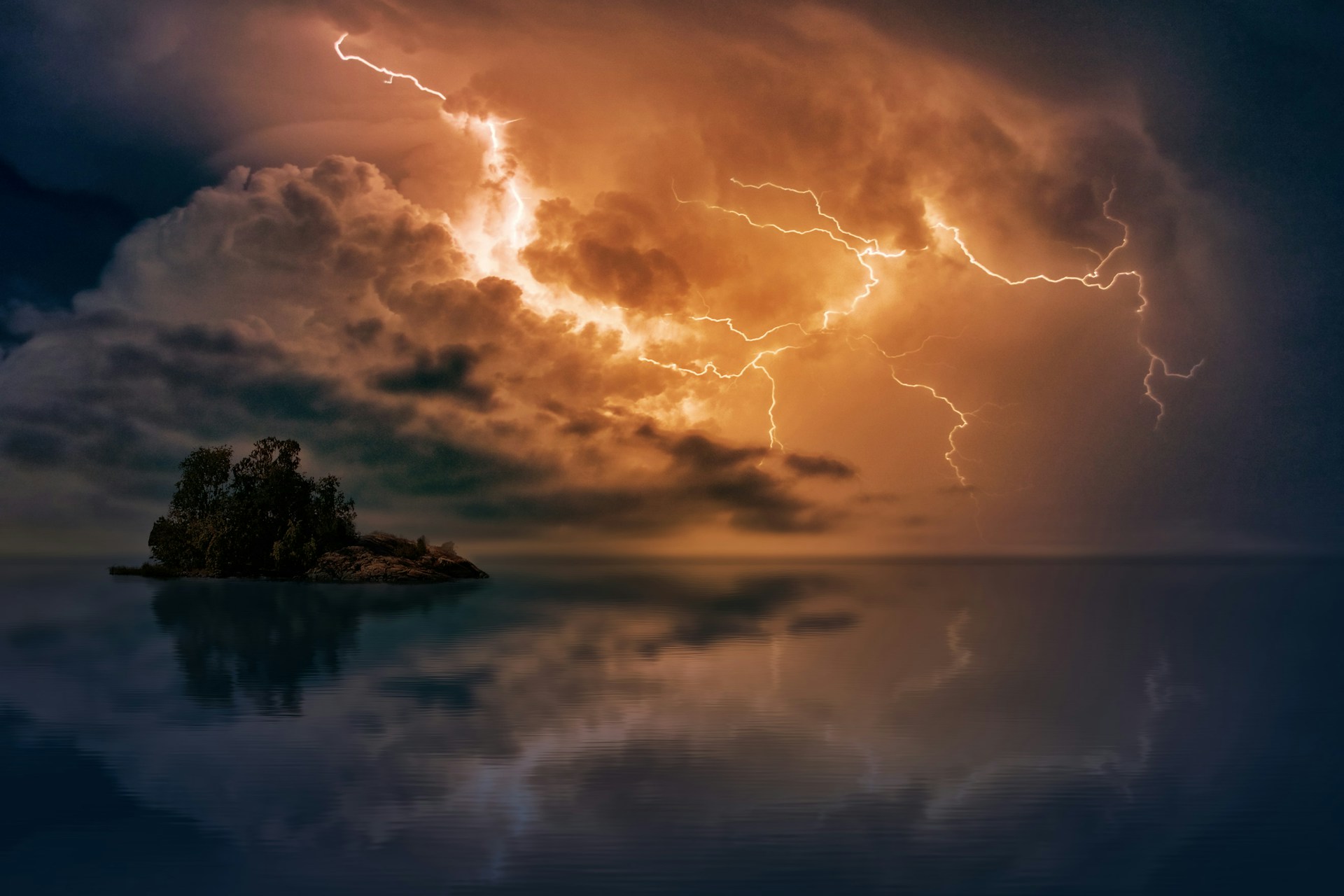
Thor needed no introduction even before Marvel films. His name literally meant "thunder" in Old Norse (Þórr), and he's everywhere:
- Thursday — Thor's day
- Thunder — from Proto-Germanic þunraz, directly cognate with Thor's name
- German: Donnerstag — literally "Thunder's day" (Donner = thunder)
The connection between Thor and thunder exists because Thor IS thunder — his name and the phenomenon were the same word. When you hear thunder, Germanic peoples heard Thor's hammer striking.
Freyja and Frigg: Friday's goddesses
Friday honors either Frigg (Odin's wife, goddess of marriage and motherhood) or Freyja (goddess of love, beauty, and war) — or possibly both, as their identities often merged in later sources.
The word Friday itself is straightforward: Frigg's day. And German "Frau" (woman, wife) does share the same root as Freyja — both derive from Proto-Germanic frawjō ("lady"). Freyja's name literally meant "The Lady."
Týr: the forgotten war god
Tuesday honors Týr, a god of war and justice who's mostly forgotten today. But he was important enough to replace Mars in the weekday naming — and for good reason. Týr's name traces back to Proto-Indo-European Dyeus, the same root that gave us Greek Zeus and Latin Jupiter. Before Odin rose to prominence, Týr may have been the chief sky god of the Germanic peoples.
Týr's most famous myth: when the gods needed to bind the monstrous wolf Fenrir with a magical chain, Fenrir agreed only if a god placed their hand in his mouth as a sign of good faith. Týr volunteered — and when the chain held, Fenrir bit off his hand.
Týr gave us Tuesday across Germanic languages (Tirsdag, Tisdag, etc.), but otherwise left little trace in modern vocabulary.
Beyond the calendar: Norse words in English
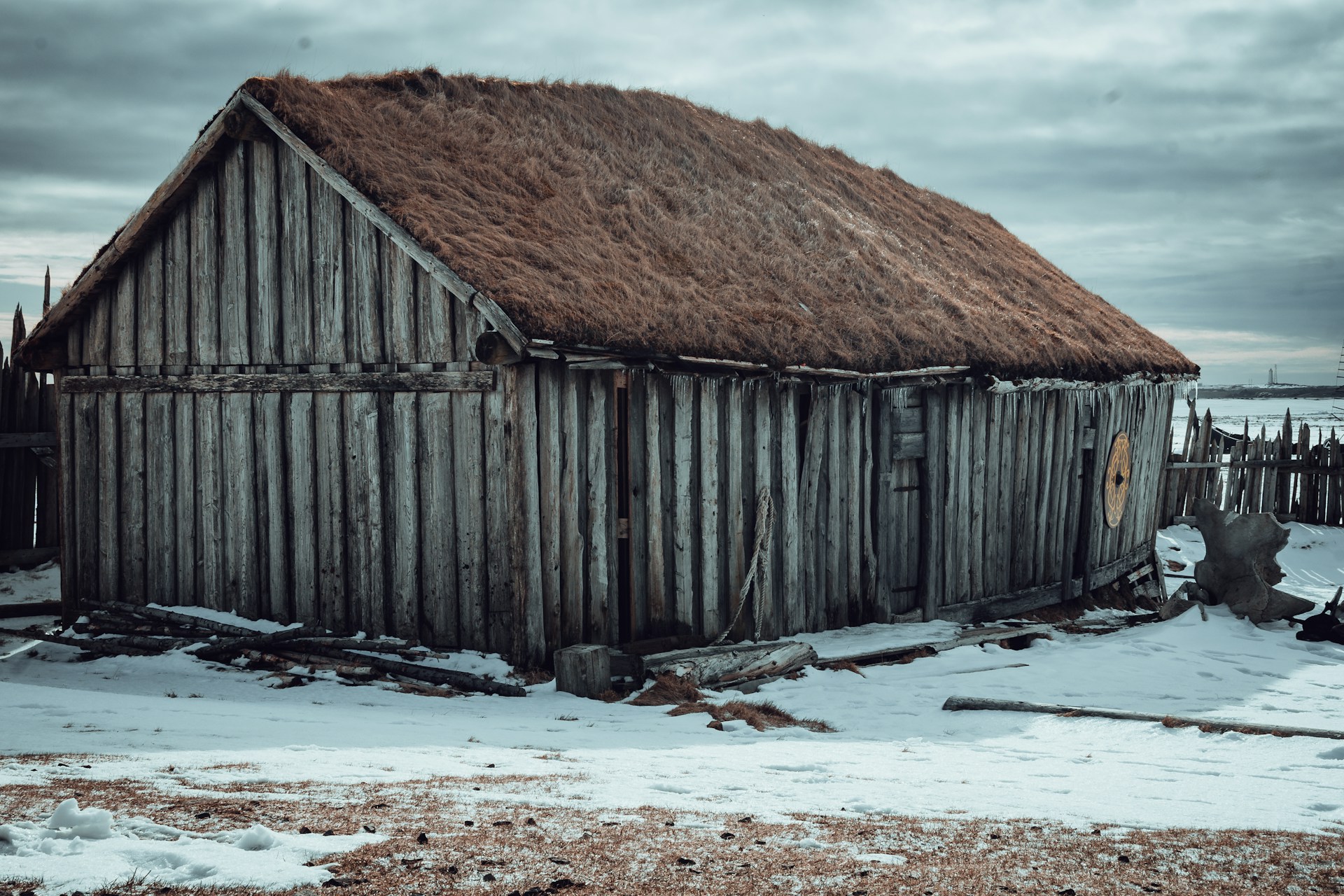
Norse mythology and Viking culture contributed far more than weekday names:
Valhalla — the hall where warriors slain in battle feasted with Odin. Used today for any final resting place of heroes or a metaphorical paradise.
Berserk — from berserker, warriors who fought in a trance-like fury. The etymology is debated: possibly wearing bear (ber-) skins (serkr), or possibly from berr (bare, unarmored). Either way, they worked themselves into such a frenzy that they felt no pain and showed no fear.
Hell — from Hel, both the Norse underworld and its ruler, a goddess who was half-alive and half-corpse. The Christian concept of Hell borrowed and transformed this Norse word.
Ransack — from Old Norse rannsaka (to search a house), used when Vikings thoroughly "searched" homes they raided.
Slaughter — possibly from Old Norse slátr (butchering meat), grimly applied to killing.
Skull — from Old Norse skalli (bald head) and related to skál (bowl) — both referring to a rounded container or shell. The myth about Vikings drinking from skulls? A 17th-century mistranslation of a poetic phrase about drinking horns.
Saga — an Old Norse word for "story" or "history," now used for any long narrative.
Thing — surprisingly, from Old Norse þing, which meant "assembly" or "meeting." The Vikings held things to settle disputes and make laws. The word broadened to mean "any matter being discussed" and eventually "any object at all."
Quick reference: Norse myth → modern word
| Norse Origin | Modern Word(s) |
|---|---|
| Odin/Woden | Wednesday |
| Thor | Thursday, thunder |
| Frigg/Freyja | Friday |
| Týr | Tuesday |
| Hel (underworld) | Hell |
| Valhǫll (warrior hall) | Valhalla |
| Berserker (frenzied warrior) | Berserk |
| Rannsaka (search house) | Ransack |
| Saga (story) | Saga |
| Þing (assembly) | Thing |
Test your knowledge
Wednesday is named after which Norse god?
Norse influence across Germanic languages
Because Norse mythology was shared across Scandinavian and Germanic peoples (with variations), its linguistic influence appears throughout. (German, of course, still capitalises its Nouns — a quirk English dropped in the 18th century.)
| Concept | English | German | Swedish | Norwegian | Icelandic |
|---|---|---|---|---|---|
| Thunder day | Thursday | Donnerstag | Torsdag | Torsdag | Fimmtudagur* |
| Warrior hall | Valhalla | Walhalla | Valhall | Valhall | Valhöll |
| Frenzied | Berserk | Berserker | Bärsärk | Berserk | Berserkur |
*Icelandic "Fimmtudagur" means "fifth day" — like German's Mittwoch, a later Christian replacement.
The takeaway
Norse mythology didn't just give us comic book heroes — it structured our week, named our thunder, and left dozens of words scattered through English. Every Tuesday through Friday, we're speaking Old Norse without realizing it.
Together, Greek, Roman, and Norse mythologies form a triple foundation of European vocabulary. The Greeks gave us scientific and psychological terms. The Romans gave us the calendar, planets, and Latin roots. The Norse gave us weekdays and the raw, vivid words of a warrior culture.
Next time someone asks why "Wednesday" is spelled so strangely, you can tell them: blame Odin.
Sources
- Etymonline — etymonline.com — entries for Thursday, thunder, berserk, hell, ransack, thing
- Wikipedia — Norse Mythology, Names of the Days of the Week
- Lindow, John. Norse Mythology: A Guide to Gods, Heroes, Rituals, and Beliefs. Oxford University Press, 2002.
- Simek, Rudolf. Dictionary of Northern Mythology. D. S. Brewer, 1993.
- Oxford English Dictionary — oed.com — entries for berserk, thing (subscription required; many libraries offer free access)
Farvel! — Pip 🌿
Related posts
Want to practise what you've read?
Lingoberry gives you AI-powered translation, dictation, and speaking exercises — guided by Pip.
Try Lingoberry — it's freeComments
Join the conversation!
Log in to commentNo comments yet. Be the first to share!