

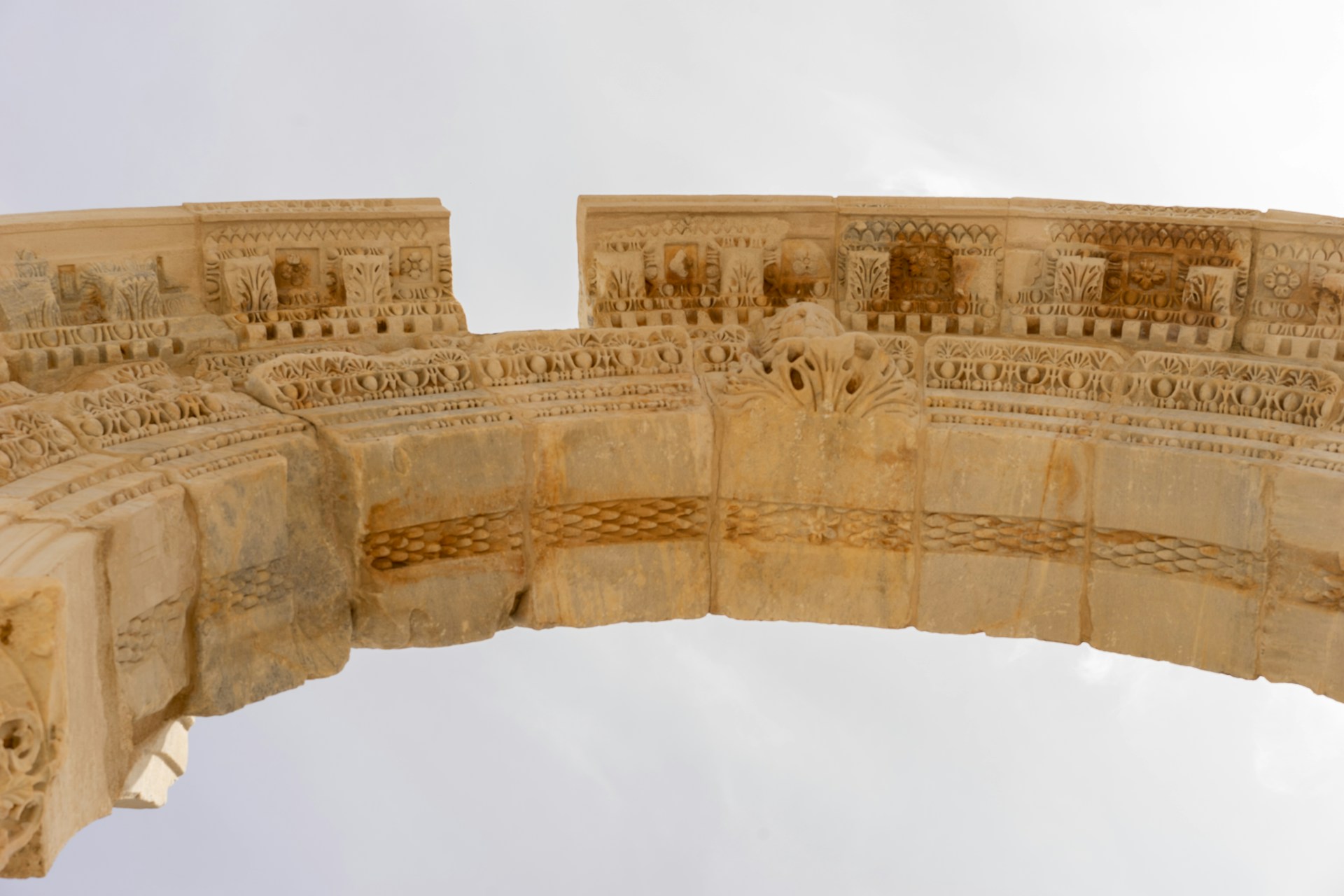
Pompeii, preserved by the volcano that buried it. Photo by Riccardo Di Curti on Unsplash
Mythology & Language, Part 2: How Roman Gods Named Our Calendar

Pip
Sep 23, 2026 · 6 min read
The Romans were great borrowers. They adopted Greek gods, gave them new names, and then did something the Greeks never managed — they built an empire that stamped Latin onto half the world. Today, Roman mythology lives on not just in vocabulary, but in the very structure of our calendar, our planets, and our scientific naming conventions.
Let's explore how Jupiter, Mars, and Venus still shape the words we use.
The calendar: a year of Roman gods
Every time you write a date, you're invoking Roman mythology. (We explored how the weekday names split between Roman planets and Norse gods in an earlier post — the months are a purer Roman affair.)
January — Named for Janus, the two-faced god of beginnings, endings, doorways, and transitions. He looked both backward and forward, making him the perfect deity for the turning of the year. His name also gave us janitor (doorkeeper).
March — Named for Mars, the god of war. March was originally the first month of the Roman calendar — the time when military campaigns resumed after winter. Mars also gives us martial (relating to war) and the planet Mars.
April — Most likely from Latin aperire (to open, as flowers do in spring), though popular tradition — including among the Romans themselves — linked it to Aphrodite, the Greek counterpart of Venus. Folk etymology or not, the association with Venus and springtime fits.
May — Named for Maia, goddess of growth and spring, one of the Pleiades and mother of Mercury.
June — Named for Juno, queen of the gods, goddess of marriage and childbirth. June weddings aren't just tradition — they're mythologically appropriate.
July and August break the pattern — they're named for Julius Caesar and Augustus, Roman rulers who inserted themselves into divine company. Before their egos intervened, July was Quintilis (fifth month) and August was Sextilis (sixth month).
The planets: a cosmic pantheon
Look up at the night sky, and you're seeing Roman gods:
| Planet | Roman God | Domain | Words Derived |
|---|---|---|---|
| Mercury | Mercurius | Messenger, trade | Mercury (element), mercurial, commerce |
| Venus | Venus | Love, beauty | Venereal, venerate |
| Mars | Mars | War | Martial, March |
| Jupiter | Jupiter | King of gods, sky | Jovial (born under Jupiter = happy disposition) |
| Saturn | Saturnus | Agriculture, time | Saturday, saturnine (gloomy — opposite of jovial) |
| Neptune | Neptunus | Sea | Neptunian |
| Pluto | Pluto | Underworld | Plutonium, plutocracy (rule by the wealthy — Pluto also meant "wealth") |
The word jovial deserves special attention. In astrology, being born under Jupiter's influence meant you'd be cheerful and good-humored. Someone saturnine, by contrast, was born under Saturn — slow, gloomy, and melancholic. We still use these words without knowing we're casting horoscopes.
Volcanoes, vultures, and vulcanization

Vulcan was the Roman god of fire and forge — the blacksmith of the gods who crafted weapons beneath mountains. When ancient Romans saw mountains spitting fire, they assumed Vulcan was at work below.
Hence: volcano.
The connection runs deeper. Charles Goodyear's process for strengthening rubber uses heat and sulfur — he named it vulcanization after the god of fire.
And while we're here: what about vulture? The Latin vultur looks suspiciously similar to Vulcanus, and it's tempting to imagine Vulcan's fire-birds circling overhead. But this is a false trail. Vultur comes from vellere — to pluck, to tear — the vulture being the creature that rips its meal apart. Vulcanus is almost certainly Etruscan in origin. Two words that look like fire-god cousins in Latin but have nothing to do with each other. Etymology loves these ambushes.
The Fates, Furies, and Fortune
Fortuna, goddess of luck and fate, gave us:
- Fortune — luck, whether good or bad
- Fortunate — lucky
- Unfortunate — unlucky
The Parcae (Roman Fates) who spun, measured, and cut the thread of life connect to fate and fatal — from Latin fatum, "that which has been spoken" by the gods.
Furia (fury) named the Furies — spirits of vengeance — and gave us the word for intense anger.
Gods in science and medicine
Roman mythology is embedded in scientific terminology:
Cupid (god of desire, Venus's son) gave his name to cupidity — the word for greed, from the same Latin root as his name: cupido, meaning desire or longing. The god of love and the desire for wealth turn out to be closer than you'd think.
Flora (goddess of flowers) gave us flora (plant life), floral, and flourish.
Fauna (goddess of animals, fertility) gave us fauna (animal life).
Ceres (goddess of grain and harvest) gave us cereal — which literally means "relating to Ceres."
Bacchus (god of wine) gave us bacchanalia — a wild celebration, originally his festival.
Quick reference: Roman myth → modern word
| Roman God/Concept | Modern Word(s) |
|---|---|
| Janus (doorways) | January, janitor |
| Mars (war) | March, martial, Martian |
| Venus (love) | Venereal, venerate |
| Mercury (messenger) | Mercury, mercurial |
| Jupiter (king) | Jovial |
| Saturn (agriculture) | Saturday, saturnine |
| Vulcan (fire) | Volcano, vulcanization |
| Ceres (grain) | Cereal |
| Flora (flowers) | Flora, floral, flourish |
| Fauna (animals) | Fauna |
| Cupid (desire) | Cupid, cupidity |
| Fortuna (luck) | Fortune, fortunate |
Test your knowledge
January is named after Janus, the Roman god of:
Latin across languages
Because Latin was the Roman Empire's language, and later the language of the Catholic Church and European scholarship, Roman mythological terms spread everywhere. (French kept some surprising non-Roman quirks, though — including a counting system that still forces you to do mental math, courtesy of Celtic tribes who never quite surrendered to Latin.)
| Concept | English | Spanish | French | German | Italian |
|---|---|---|---|---|---|
| Luck/wealth | Fortune | Fortuna | Fortune | Fortuna | Fortuna |
| Grain food | Cereal | Cereal | Céréale | Zerealien | Cereale |
| Happy/cheerful | Jovial | Jovial | Jovial | Jovial | Gioviale |
| Fire mountain | Volcano | Volcán | Volcan | Vulkan | Vulcano |
The takeaway
Roman mythology didn't just copy Greek myths — it systematized them, gave them Latin names, and embedded them into the calendar, the planets, and scientific vocabulary that spread across the world. Every month you write, every cereal you eat, every volcano you learn about — the Roman gods are there.
Next time, we'll venture north to the Norse myths — gods who didn't just name weekdays, but gave us words like "berserk," "hell," and "ransack."
Sources
- Etymonline — etymonline.com — entries for January, janitor, April, volcano, vulcanization, jovial, cereal
- Wikipedia — Roman Calendar, Roman Mythology
- Oxford English Dictionary — oed.com — entries for April, saturnine (subscription required; many libraries offer free access)
- Scullard, H. H. Festivals and Ceremonies of the Roman Republic. Cornell University Press, 1981.
Vale! — Pip 🌿
Related posts
Want to practise what you've read?
Lingoberry gives you AI-powered translation, dictation, and speaking exercises — guided by Pip.
Try Lingoberry — it's freeComments
Join the conversation!
Log in to commentNo comments yet. Be the first to share!