
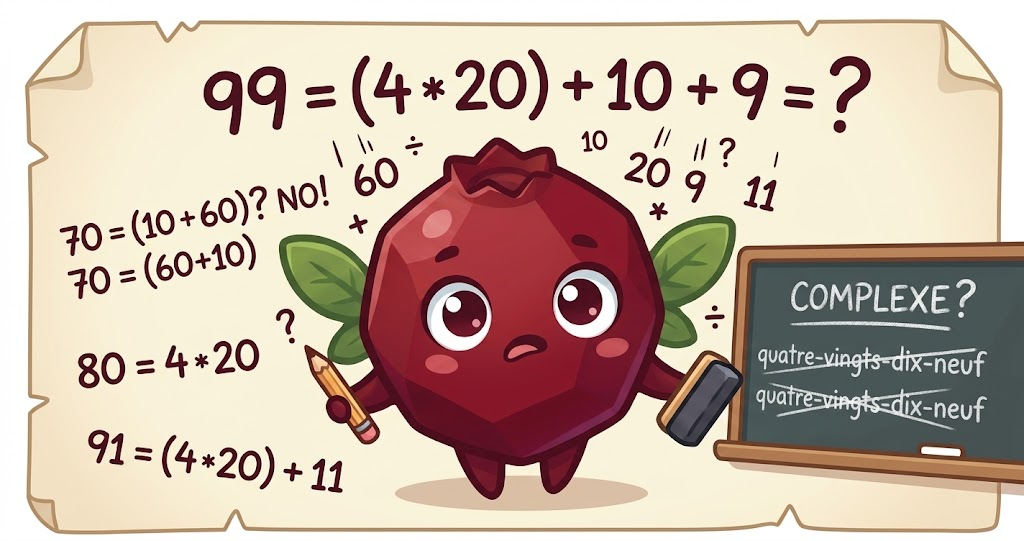
 AI-generated image
Why French numbers force you to do mental math?

Pip
Aug 14, 2026 · 5 min read
If you've ever tried learning French, there is a specific moment where the language suddenly feels like a pop quiz in mental arithmetic.
Everything starts off smoothly enough:
- 10 is dix
- 20 is vingt
- 30 is trente
- 60 is soixante
Then you hit 70, and instead of a nice, orderly word for "seventy," you get soixante-dix ("sixty-ten").
You brace yourself for 80, expecting it to get back on track. Instead, French hits you with quatre-vingts ("four twenties"). By the time you reach 99—quatre-vingt-dix-neuf ("four twenties, ten, nine")—you aren't just speaking French; you're solving an algebraic equation just to buy a coffee.
Why on earth did French abandon the base-10 system halfway through counting? Why doesn't France say septante, huitante, or nonante like every other sensible Romance language?
To answer that, we have to look at a clash of ancient civilizations, medieval hospitals, and a room full of 17th-century snobs in Paris.
Base-10 vs. Base-20: The Battle for Gaul
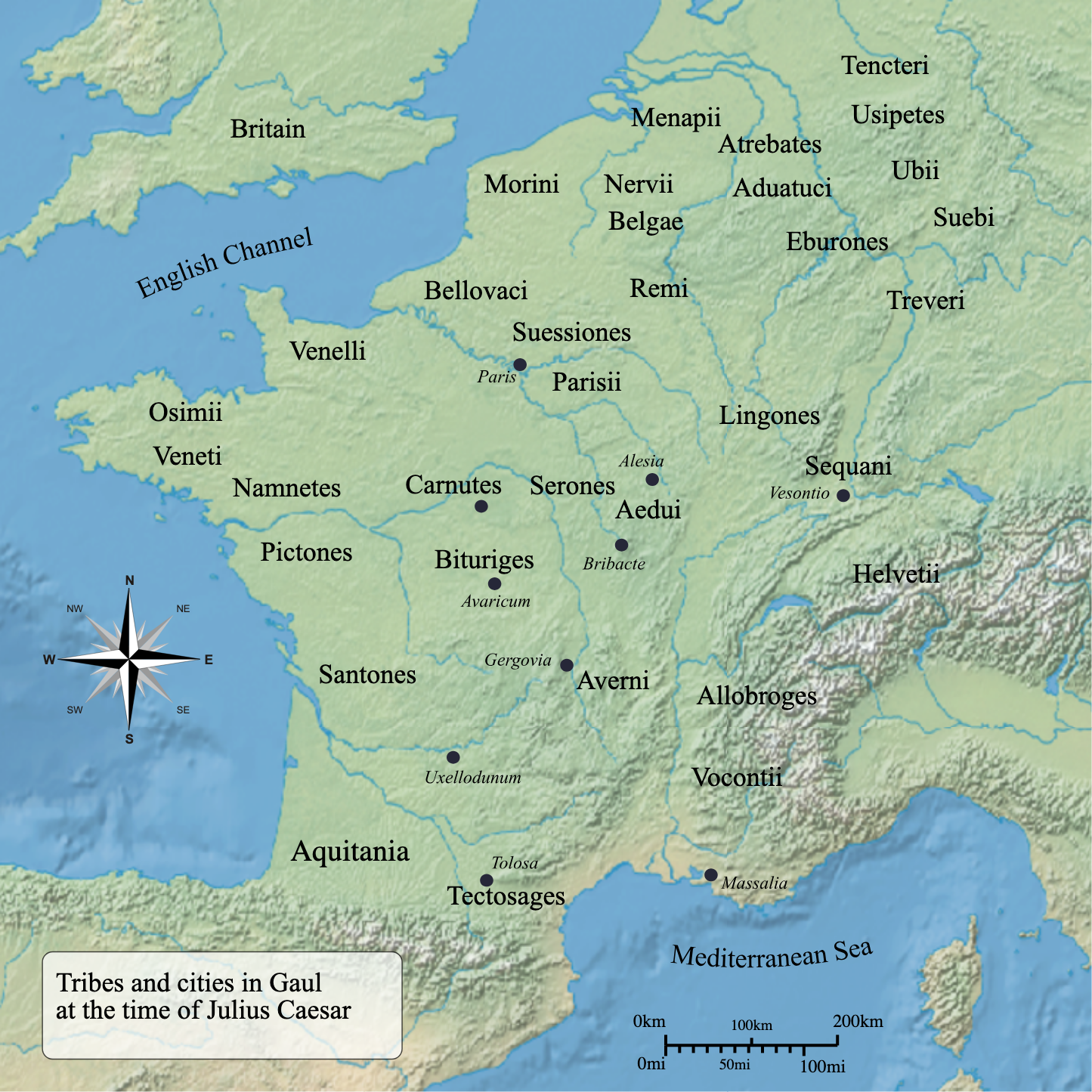
Most modern counting systems are decimal (base-10). It's intuitive: humans have ten fingers, so we group numbers by tens (10, 20, 30, 40...). When the Romans invaded Gaul (modern-day France), they brought their Latin decimal numbers with them: septuaginta (70), octoginta (80), and nonaginta (90).
However, the local Celtic tribes (the Gauls) didn't count in tens. They used a vigesimal (base-20) system—likely because they counted using both fingers and toes. In their eyes, 20 was a natural stopping point.

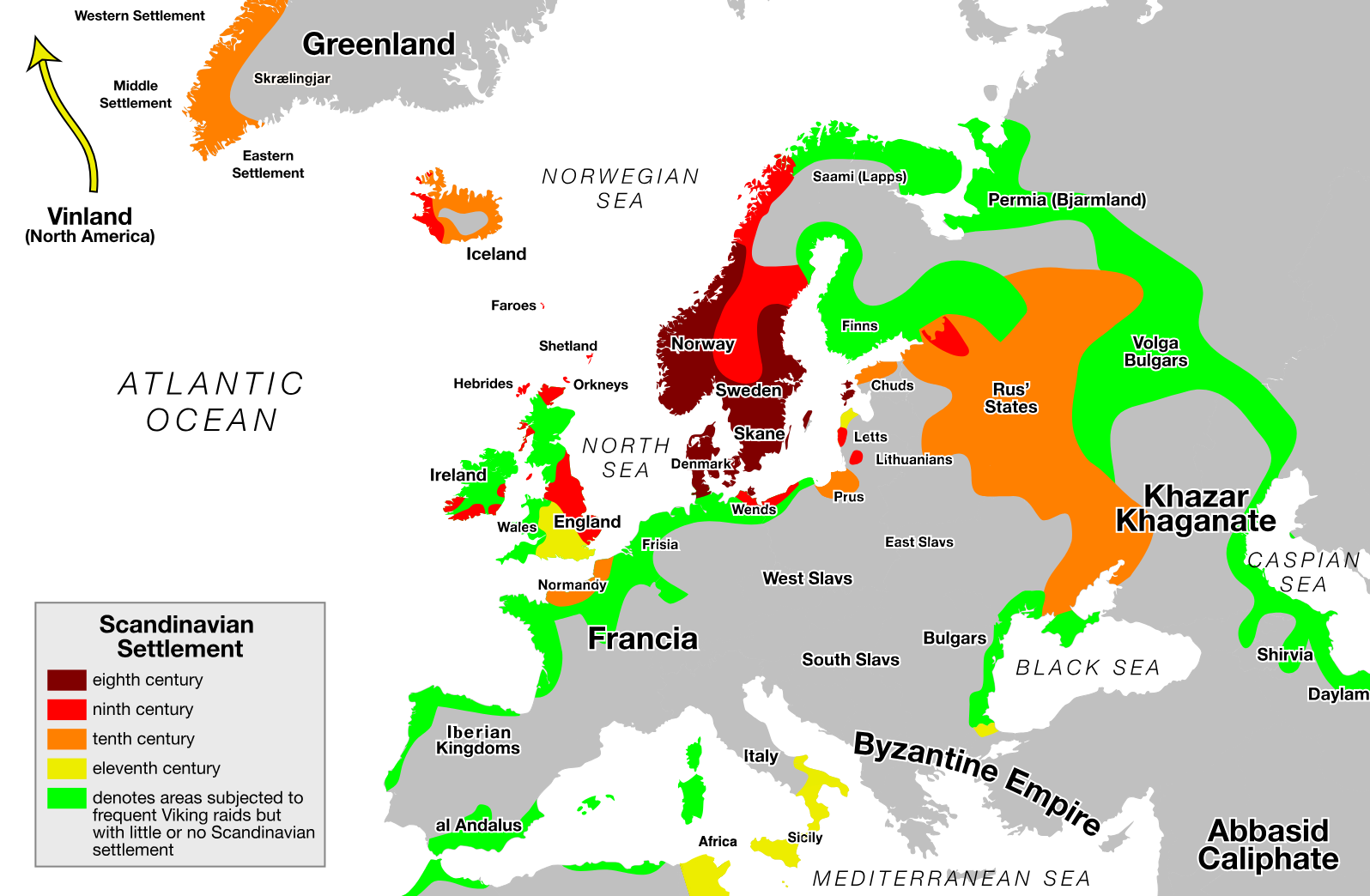
Centuries later, when Vikings settled in Normandy during the 9th century, they brought their own base-20 traditions. The English word "score" meaning twenty is itself a Viking loan word, derived from Old Norse skor (a tally notch)—which is why Abraham Lincoln could open the Gettysburg Address with "four score and seven years ago," literally meaning 4 × 20 + 7 = 87.

For hundreds of years, French existed in a chaotic hybrid state where both systems competed side-by-side:
- If you preferred Latin base-10, you said septante (70), octante (80), and nonante (90).
- If you preferred base-20, you counted in multiples of twenty. In Middle French, people routinely said six-vingts for 120 (6 × 20) or diz-vingts for 200 (10 × 20).
In 1260, King Louis IX founded a Paris hospital for 300 blind people and named it the Hospice des Quinze-Vingts—literally the "Hospital of the Fifteen-Twenties" (15 × 20 = 300). The hospital still exists in Paris today under that exact same name!

Enter the Parisian Snobs
By the 16th and 17th centuries, the clean, Latin-based forms (septante, huitante, nonante) were widely used across France. If history had taken a normal turn, France would be using them today.
So what changed? Parisian prestige.
In the 1600s, upper-class Parisians, popular street merchants, and influential writers favored the quirky, traditional vigesimal forms (soixante-dix and quatre-vingts).
In 1635, Cardinal Richelieu founded the L'Académie Française—a council of scholars tasked with standardizing the official French language. Its grammarians, following the principle that the usage of the Parisian court defined "pure" and fashionable French, elevated the vigesimal forms over the logically tidier Latin ones.
When the Académie published its official dictionary, Parisian fashion beat out centuries of Latin logic.
Belgium and Switzerland enter the chat
If you travel outside of France, you'll discover that not every French speaker agreed to go along with Paris's math problem:
| Number | Standard French (France) | Belgian & Swiss French | Literal Translation |
|---|---|---|---|
| 70 | soixante-dix | septante | Sixty-ten vs. Seventy |
| 80 | quatre-vingts | huitante / octante (Swiss) | Four-twenties vs. Eighty |
| 90 | quatre-vingt-dix | nonante | Four-twenties-ten vs. Ninety |
Because Belgium, Switzerland, and parts of francophone Africa were outside the direct authority of the Académie Française, they kept the logical Latinate words.
How to master them without going crazy
If you're learning standard French, don't try to calculate 4 × 20 + 10 + 9 every time someone gives you a phone number. Instead, train your brain to recognize the sound blocks:
- Think in chunks, not math: Treat quatre-vingt as a single standalone sound block meaning "80", rather than multiplying 4 by 20 in your head.
- Listen for the second digit: If you hear soixante... followed by a number between 1 and 9 (soixante-cinq), you're in the 60s (65). If it's followed by 10 to 19 (soixante-quinze), you're in the 70s (75).
- The same rule applies to 80 and 90: Quatre-vingt-trois is 83. Quatre-vingt-treize is 93.
Embrace the madness—it's not a glitch in the French language, it's a 2,000-year-old historic battle between Roman legionnaires, Celtic tribes, and 17th-century Parisian aristocrats!
À la prochaine! — Pip 🌿
Sources
- Wikipedia: French numbers — overview of the vigesimal system and regional variants
- Wikipedia: Vigesimal (base-20) numeral systems — history and examples across cultures
- Wikipedia: Académie française — founding, role, and influence on standardizing French
- Wikipedia: Claude Favre de Vaugelas — the grammarian who championed Parisian prestige usage
- Wikipedia: Quinze-Vingts National Ophthalmology Hospital — the Paris hospital founded by Louis IX, named in vigesimal counting
- Wikipedia: Normans — Viking settlement in Normandy and their influence on Old French
- Wikipedia: Gaulish language — Celtic tribes of Gaul and their counting traditions
- WALS Online: Comrie, Bernard — "Numeral Bases" (ch. 131) — cross-linguistic survey of base-10 vs. base-20 systems
- Académie française: Le Dictionnaire — the official French dictionary
- Etymonline: score — etymology of "score" as twenty, from Old Norse skor
Related posts
Want to practise what you've read?
Lingoberry gives you AI-powered translation, dictation, and speaking exercises — guided by Pip.
Try Lingoberry — it's freeComments
Join the conversation!
Log in to commentNo comments yet. Be the first to share!