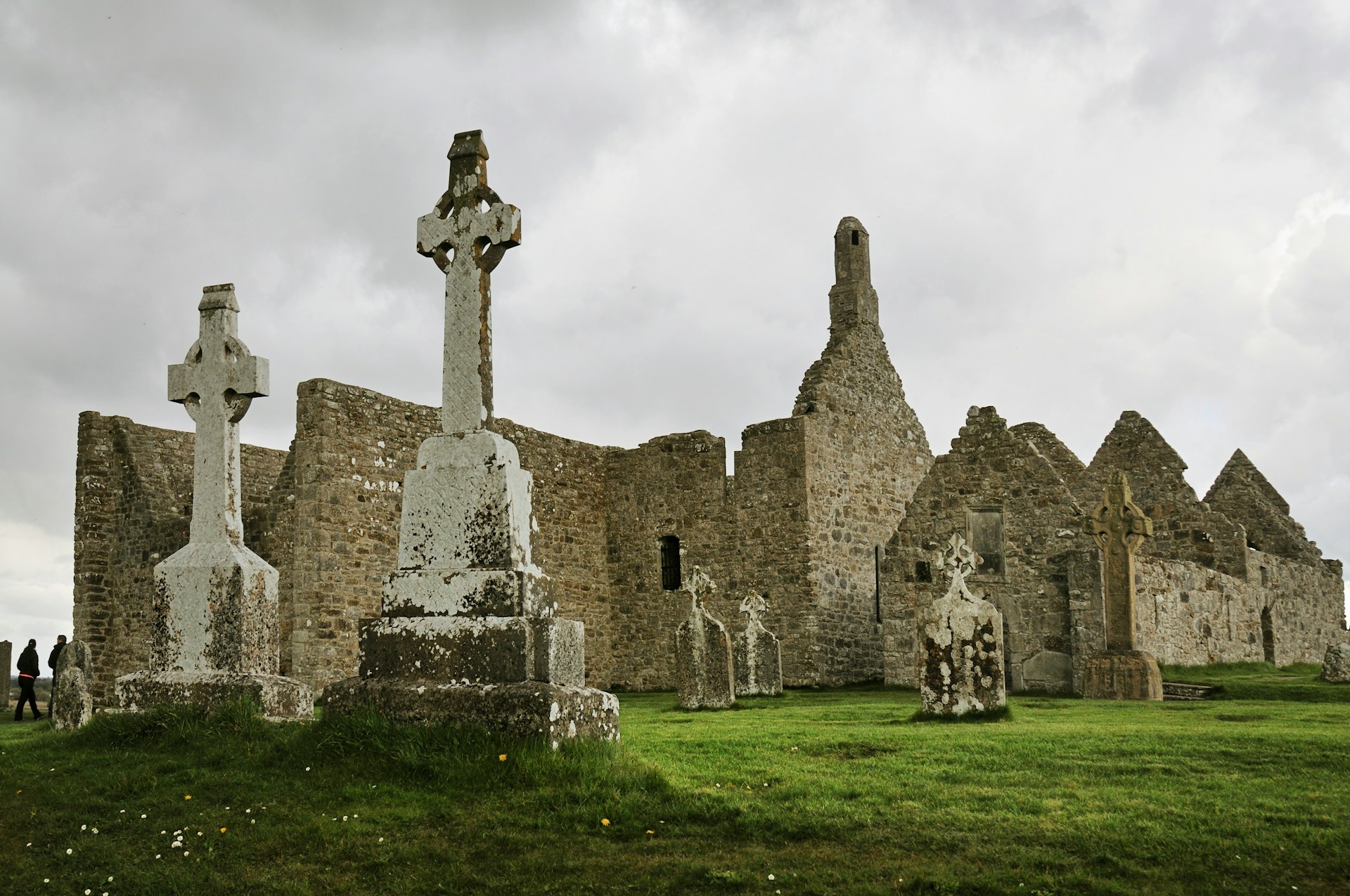
Clonmacnoise monastery, County Offaly, Ireland (founded 544 AD) — Celtic high crosses and cathedral ruins where monks preserved Irish mythology in writing. Photo by Gérard GRIFFAY on Unsplash
Mythology & Language, Part 4: The Celtic ghosts hiding in your city map and your calendar

Pip
Oct 4, 2026 · 11 min read
You've learned that Thursday belongs to Thor, that January honours Janus, and that the word "panic" comes from the god Pan. Three parts into this series, the pattern feels familiar: spot a god, find the word.
Celtic mythology breaks the pattern.
The Celts were once everywhere. At their peak around 275 BC, Celtic-speaking peoples stretched from Ireland to Anatolia, covering most of western and central Europe. Then Rome came. The Gauls, the Britons, the Celtiberians were pushed out, absorbed, or converted. Their myths survived only in manuscript form, written down by Christian monks in medieval Ireland and Wales — long after the gods had stopped receiving offerings.
But the gods didn't disappear. They just went underground. They're embedded in the names of cities that millions of people live in, they're the skeleton of the holiday celebrated by an estimated two billion people every October 31st, and a handful of their words slipped into English through the back door. You've been saying their names your whole life. You just didn't know it.
The cities
Not every city on this list is named after a god. Some carry the name of a Gaulish tribe; others preserve a Celtic landscape description nobody thought to translate. What they share is the same buried language. Let's start with the one where a god is actually named.
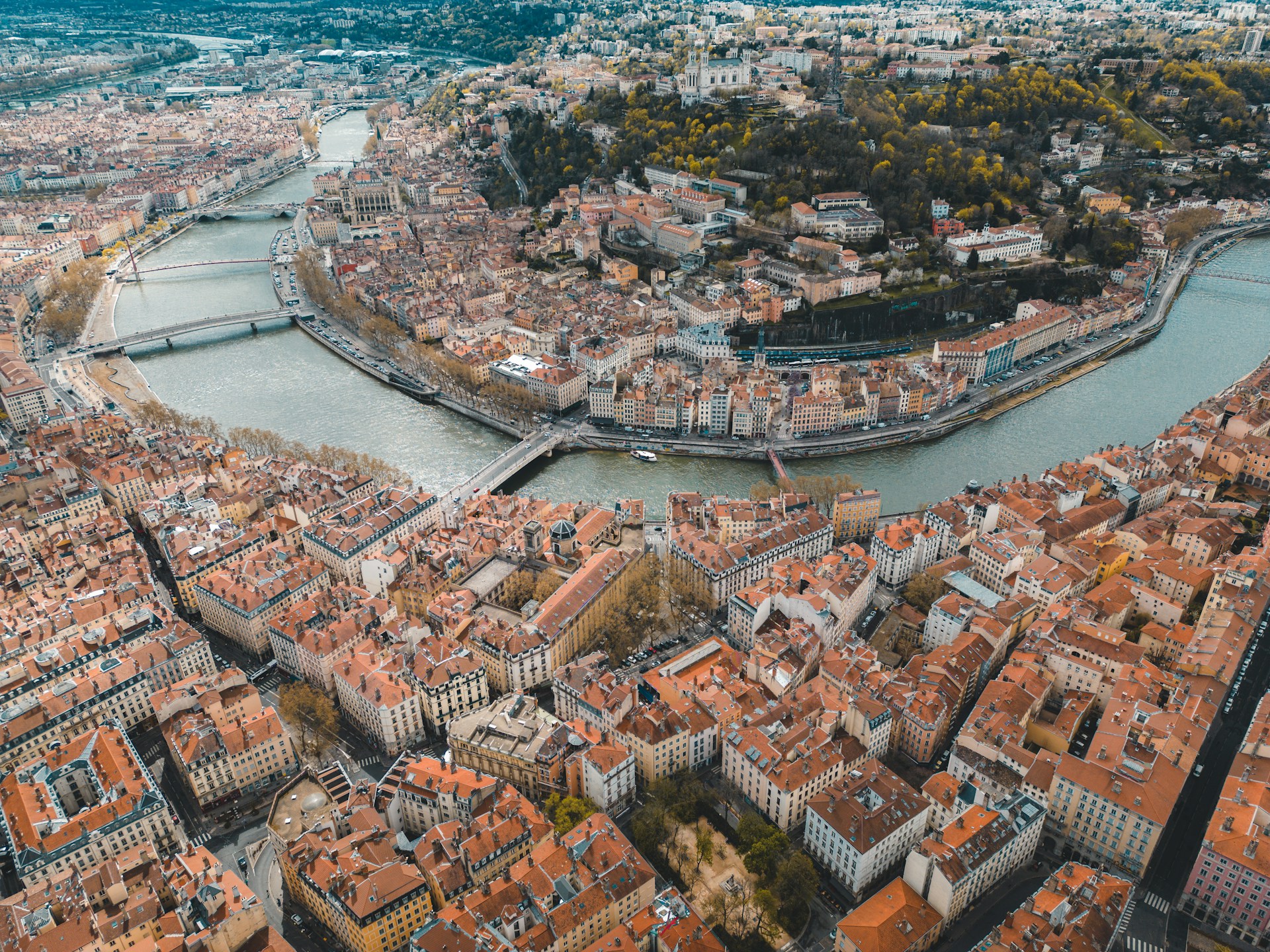
Lyon is the third-largest city in France, sitting at the confluence of the Rhône and Saône. The Romans made it the capital of Gaul — the administrative heart of everything that is now France and Belgium. Today it's famous for its cuisine, its Renaissance architecture, and its light festival. It barely gets a second thought beyond that.
The Gaulish name for Lyon was Lugdunum. Break it apart: Lugus was a pan-Celtic god of skill, craftsmanship, and trade — the Gaulish equivalent of Mercury, or Greek Hermes. He was a master of every art, a warrior-diplomat, the god you'd pray to before a business deal or a battle. The second element, dunon, meant "fort" or "hilltop settlement" in Gaulish.
Lugdunum: Lugus's fortress.
The Romans didn't rename it. The capital of Roman Gaul kept the Celtic god's name through two thousand years of history until it became "Lyon." Every time someone says "I'm going to Lyon," they are, linguistically, going to a Celtic god's hilltop.
Lugus left his mark in more places. Leiden in the Netherlands, Loudun in France — scholars debate the full list. But Lyon is the clearest case: a major European city, the centrepiece of French gastronomy, named after a deity most of its visitors have never heard of.
Milan had a different fate. The Celtic tribe called the Insubres founded it around 590 BC and named it Medhelanon. In Gaulish, medio meant "middle" or "centre," and lanum was the Celtic equivalent of the Latin planum — "plain." The settlement in the middle of the plain. The Romans Latinised the name to Mediolanum and eventually made the city capital of the Western Roman Empire, but they kept the Gaulish description. Mediolanum → Milan. Pure Celtic geography, preserved for 2,600 years.
Paris is a tribe. The Parisii were a Gaulish people who settled on the islands of the Seine around 250 BC — the same islands that form the historic core of Paris today. When the Romans arrived they called it Lutetia Parisiorum: "the Lutetia of the Parisii." The Roman name faded. The tribe's name stayed. The city of light is named after an Iron Age Celtic community.
London is an honest mystery. Londinium comes from a Brittonic (Celtic) place name — the Celtic substrate is clear in the phonology. But the root meaning is genuinely unknown. Unlike Lyon, where the god is named and documented, London's Celtic meaning was lost before anyone wrote it down. The language survived the Romans; the sense didn't. There's something Celtic about that, too.
Further north, York carries Celtic bones under several layers of later renaming. The Britons called it Eborakon — most likely from eburos, the Celtic word for yew tree. The Romans Latinised it to Eboracum. Anglo-Saxon settlers heard something different in the syllables and called it Eoforwic ("boar settlement"). Then the Vikings arrived and turned that into Jórvík. "York" is the end result of all that linguistic telephone — but the yew tree at its root is Celtic.
Vienna is cleaner. The Romans built a fort on the Danube and recorded the Gaulish name already in use: Vindobona, from vindo- ("white" or "bright") and -bona ("foundation" or "settlement"). The white settlement on the Danube eventually became one of the great capitals of Europe. The Gaulish description is still there in the name.
And then there are the rivers. The Thames comes from Brittonic Tamesas. Every river called "Avon" — and there are at least three in England and Wales — comes from Brittonic abona, simply meaning "river." Every Avon is literally called "River River." Celtic speakers named it and walked away. English speakers inherited the syllables with no idea what they meant and used them as a proper noun.
The holiday
Every October 31st, roughly two billion people put on costumes, carve faces into vegetables, and hand sweets to strangers who knock on their doors. Most of them know vaguely that it has something to do with old Irish tradition. Fewer know the actual mechanics.
The original festival was called Samhain — pronounced SAH-win. It was one of four great Gaelic seasonal festivals: Samhain (November 1), Imbolc (February 1), Beltane (May 1), and Lughnasadh (August 1). Samhain marked the end of the harvest and the beginning of winter — the start of the "dark half" of the year.
The timing is important. The Celts measured their day from sunset to sunset, so Samhain began on the evening of October 31st. And this particular threshold evening carried a specific danger: the boundary between the living world and the Otherworld — the realm of spirits and the dead — was considered thin. Things could cross over. Ancestral souls came home; less friendly presences roamed freely.
This is where the costumes come from. People dressed up to disguise themselves from the spirits — to blend in, to avoid being recognised and taken. Food and drink were left outside as offerings, partly to appease the wandering dead and partly to ensure they didn't come indoors. Bonfires were lit to draw spirits away from homes and toward a controlled gathering point.
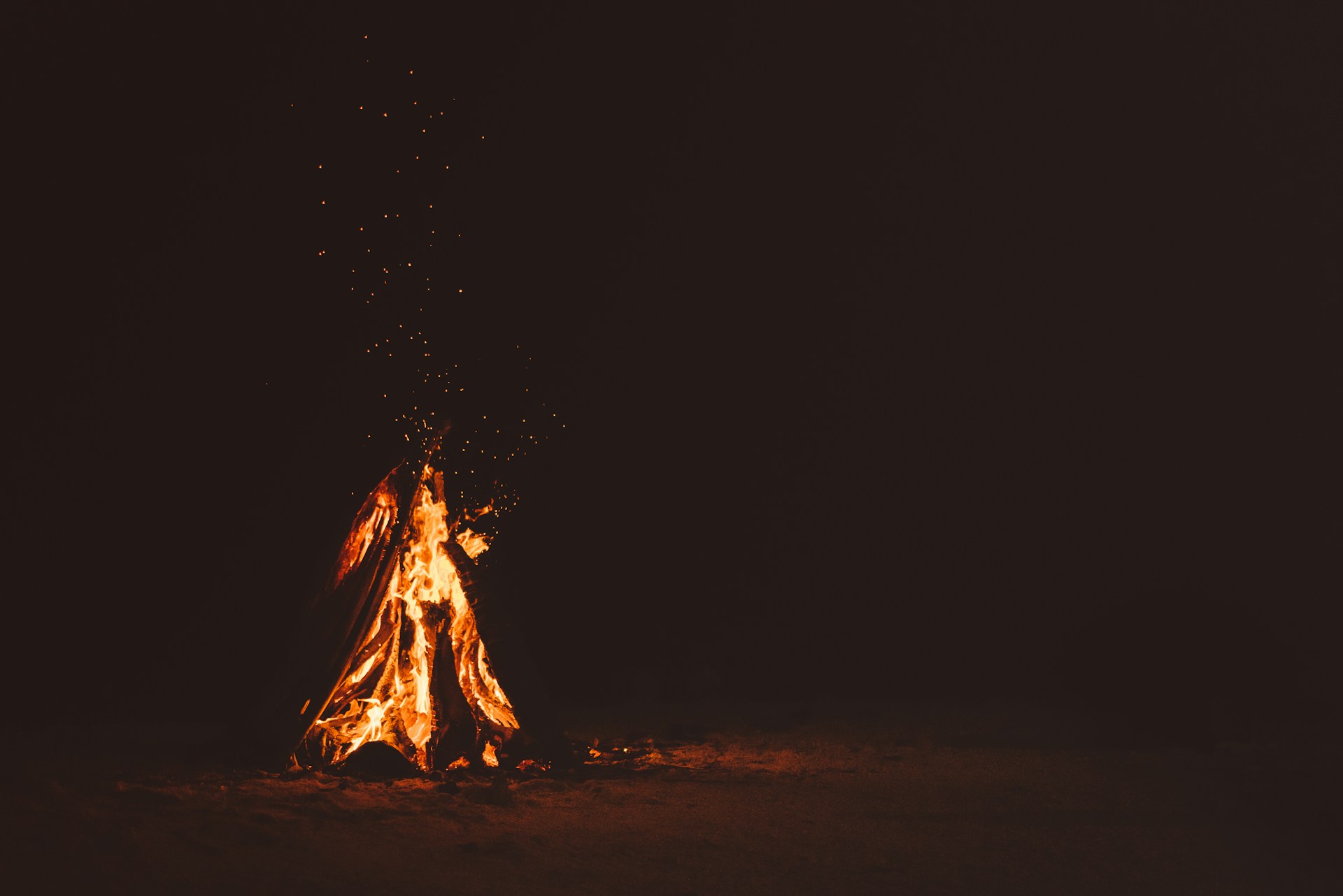
In the 9th century, the Western Church placed All Saints' Day on November 1st — likely influenced by Irish missionaries already marking that date. All Souls' Day followed on November 2nd. The Gaelic harvest-of-the-dead and the Christian feasts of the holy dead layered over each other across centuries. All Hallows' Eve became Halloween.
The turnip was the original jack-o'-lantern. Irish and Scottish families carved faces into turnips and placed candles inside, to scare away the spirits rather than welcome them. Irish immigrants brought the tradition to North America in the 19th century and discovered pumpkins: bigger, softer, far easier to carve. The vegetable changed. The two-thousand- year-old Celtic practice of carving a light to ward off the spirit world did not.
Samhain's sibling festivals are less famous in the English-speaking world, but they're still very much alive. Beltane — May 1st, the counterpart festival at the other end of the year — draws tens of thousands to Edinburgh's Calton Hill for bonfires and processions every spring. And Lughnasadh, the harvest festival on August 1st, was named directly after Lugh: the same god whose fortress became Lyon. The god who gave his name to the third-largest city in France also gave his name to the Irish summer feast. The same deity, different countries, two thousand years apart, still in the calendar.
The words
Celtic languages left fewer direct traces in English than Latin, French, or Norse. The Britons were absorbed into Anglo-Saxon England. The continental Gauls became Latin speakers. But Irish and Scottish Gaelic held on at the Atlantic edge, and some of their words eventually made the crossing.
Whiskey might be the most celebrated. The Irish phrase uisce beatha means "water of life" — uisce is water, beatha is life. It was borrowed into English as "usquebaugh," which English speakers reliably mangled into "whisky." The Scots took the same Gaelic phrase home as uisge beatha and produced Scotch. Two countries, the same Celtic phrase, two spellings that still argue with each other.
Slogan sounds like it belongs in a marketing brief. It comes from the Scottish Gaelic sluagh-ghairm: sluagh (army, host) + ghairm (cry, shout). A battle cry. Somewhere between the Highland charge and the advertising agency, army shouts became brand catchphrases.
Galore is from Irish go leor — "enough" or "in plenty." It arrived in English in the 17th century and still sounds vaguely theatrical today, which is exactly right for a word that came in as a foreign loan and never quite settled down.
Bard traces back to Common Celtic bardos — the oral poet, the keeper of genealogy and praise, the person who sang kings into legitimacy at feasts. The Romans documented the Gaulish bardoi. The word entered English via Latin and Old French, but the root is Celtic, and the role — poet as cultural memory — is one of the oldest jobs in human civilisation.
Druid comes from Common Celtic druwid-, possibly "oak-knower" — from a root connected to knowledge or to the oak tree (scholars debate which). They were priests, judges, natural philosophers, and keepers of oral law. Julius Caesar wrote about them with the mixture of fascination and unease that the Romans tended to apply to things they couldn't fully control. The word survived, via Latin, into every European language.
And then there is corgi. From Welsh cor (dwarf) + ci (dog). Unambiguously, etymologically: dwarf dog. The Queen of England's preferred companion was named in a Celtic language. The Celts are everywhere.
Quick reference
| Celtic source | What it was | What it became |
|---|---|---|
| Lugus (god of skill and trade) | Gaulish deity | Lyon, France |
| Medhelanon (middle of the plain) | Gaulish place name | Milan, Italy |
| The Parisii | Gaulish Celtic tribe | Paris, France |
| Eburos (yew tree) | Brittonic | York, England |
| Vindobona (white settlement) | Gaulish | Vienna, Austria |
| Abona (river) | Brittonic | Every "Avon" river in Britain |
| Samhain | Irish Gaelic festival | Halloween |
| Lughnasadh | Irish Gaelic festival | August 1st harvest feast |
| Uisce beatha (water of life) | Irish Gaelic | Whiskey / whisky |
| Sluagh-ghairm (battle cry) | Scottish Gaelic | Slogan |
| Go leor (enough/plenty) | Irish Gaelic | Galore |
| Bardos (oral poet) | Common Celtic | Bard |
| Cor + ci (dwarf + dog) | Welsh | Corgi |
Lyon, France was originally called Lugdunum. What does the Lug- part of that name refer to?
Sources
- Wikipedia — Celtic mythology
- Wikipedia — Lugus
- Wikipedia — Samhain
- Wikipedia — Beltane
- Wikipedia — Mediolanum — Milan's Gaulish etymology
- Wikipedia — Londinium — notes the etymology is genuinely unknown
- Wikipedia — Lugh
- Etymonline — whiskey, slogan, bard, druid, galore
Slàinte mhath! — Pip 🌿
(Scottish Gaelic: "good health" — the traditional whisky toast. Felt appropriate.)
Related posts
Want to practise what you've read?
Lingoberry gives you AI-powered translation, dictation, and speaking exercises — guided by Pip.
Try Lingoberry — it's freeComments
Join the conversation!
Log in to commentNo comments yet. Be the first to share!