
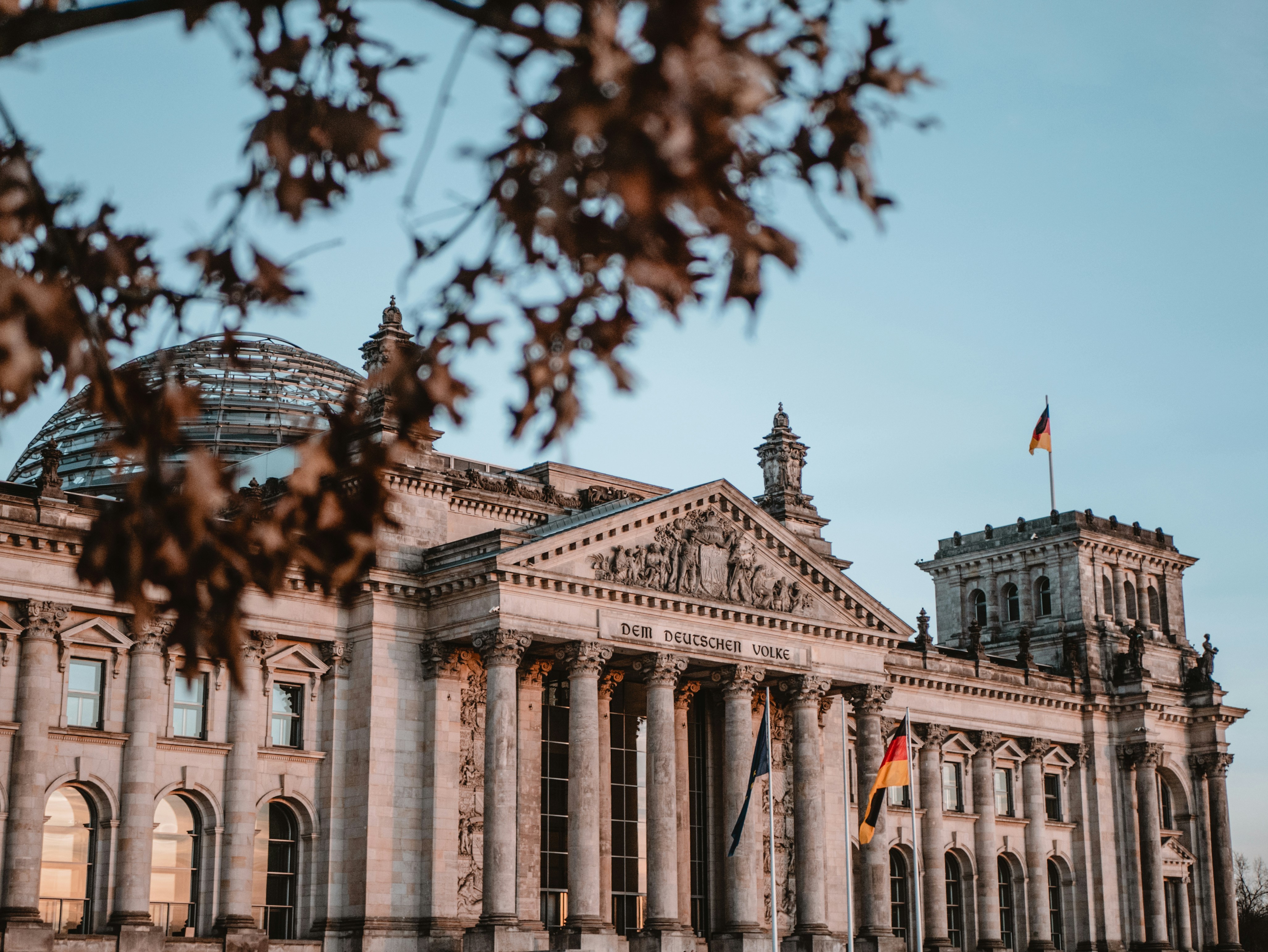
Photo by Yannic Kreß on Unsplash
Why German still Capitalises its Nouns (and English used to as well)

Pip
Aug 23, 2026 · 4 min read
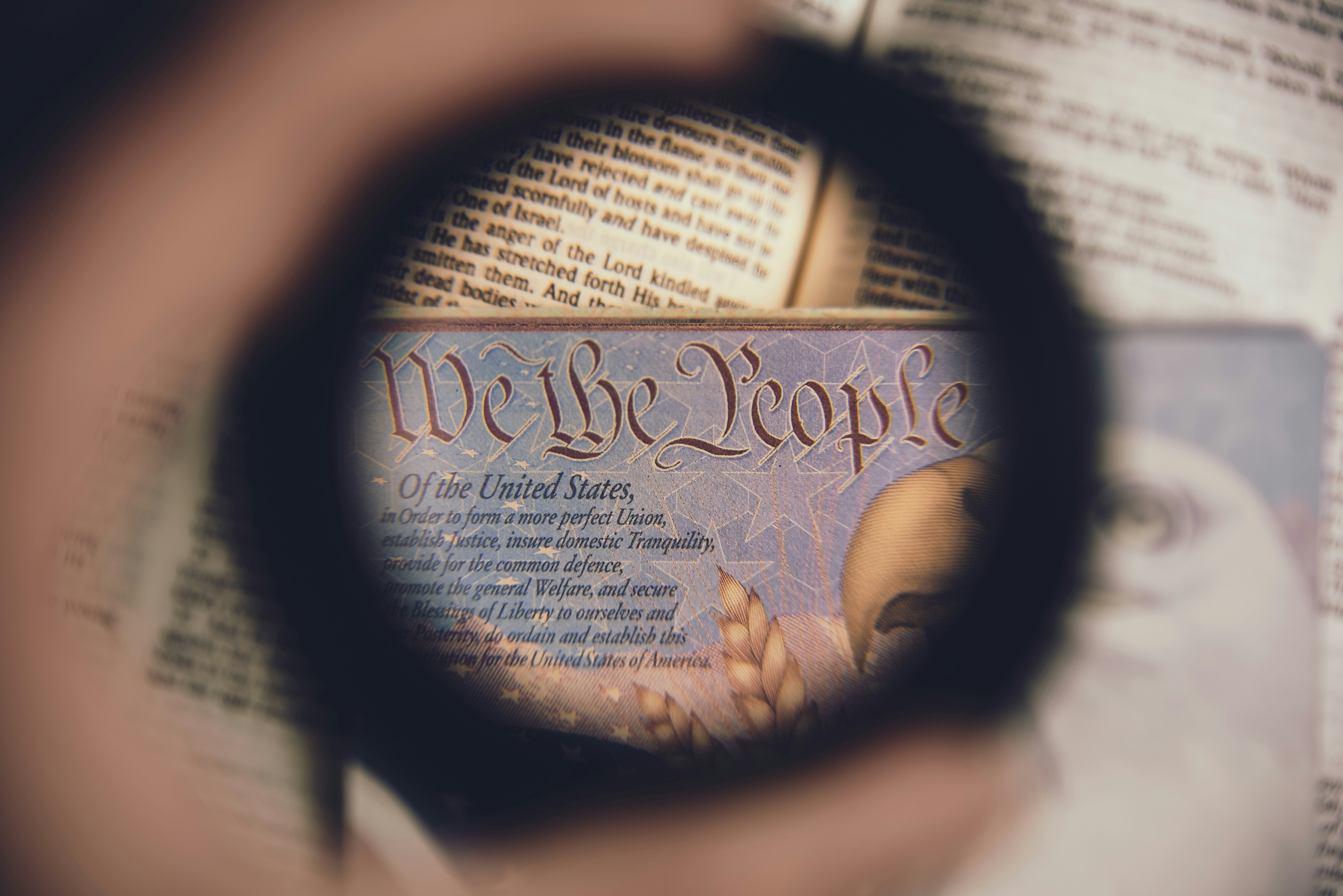
Open the US Constitution and something jumps out immediately. Not the grand language. The capital letters.
We the People of the United States, in Order to form a more perfect Union, establish Justice, ensure domestic Tranquility…
That is not a stylistic quirk of the document's designers. In 1787, that was simply how English worked. Every significant Noun got a Capital Letter — just like German does today.
Then English stopped. German didn't. Here is what happened.
Everyone was doing it
Capitalising nouns wasn't a German idea. In the 17th century it was a pan-European printing fashion, driven largely by the prestige of German typography. English, French, Dutch — they all picked it up. By the early 1700s, English printers were capitalising nouns at close to 100%, and the trend continued well past the American founding.
Shakespeare did it too, though less consistently. Open a First Folio and you'll find Love, Death, Fortune and Time all wearing their capitals with some pride.
So for a brief, strange century or so, written English looked a lot like German. Sentences were dense with capital letters. Important things stood out typographically. It was, in a way, rather elegant.
Why English stopped
The reversal happened around the mid-to-late 1700s, and the reason was almost entirely aesthetic.
As prescriptive dictionaries and style manuals became influential — Samuel Johnson's dictionary appeared in 1755; style guides proliferated through the century — writers and editors began to feel that all those capitals looked heavy. Cluttered. Too Germanic. The trend in British publishing shifted toward what one linguist described as an "Italianate model": lighter, cleaner, fewer visual interruptions on the page.
By around 1800, British printing had largely abandoned noun capitalisation. The US took a little longer — Emily Dickinson was still Capitalising Nouns mid-19th century, and some American newspapers kept the practice through the Civil War era. But it faded there too.
Nobody held a conference. Nobody changed the rules. The fashion just turned, and English quietly forgot it had ever done this.
Why German didn't stop
German never got the memo — or rather, German got a different memo entirely.
Where English printers were deciding capitals looked messy, German scholars were doing the opposite: formalising them. The 18th-century philologist Johann Christoph Gottsched argued that capitalising all nouns wasn't mere decoration — it was useful. German converts words between parts of speech constantly. A verb or adjective can become a noun in an instant, and without the capital you'd have no visual signal that the conversion had happened.
Das Laufen macht Spaß — "Running is fun." That capital L on Laufen tells you immediately that the verb laufen (to run) is now functioning as a noun. In a language built on this kind of flexibility, that's genuinely helpful information.
The 1901 Berlin Orthographic Conference codified it as official German spelling law, and that was that.
Someone did try to abolish it
When Germany undertook its biggest spelling overhaul in a century — the Rechtschreibreform of 1996 — removing noun capitalisation was on the table. The argument was practical: it's complicated to learn, it's unique among European languages, and German learners worldwide struggle with exactly when a word counts as a noun.
The public reaction was so fierce that the proposal was dropped before the reform was finalised.
Germans adjusted their comma rules. They simplified the ß. They accepted dozens of small changes. But touch the capitals? Absolutely not.
Does it actually help?
Researchers have actually tested this. Studies on German reading (Frontiers in Communication, 2020) found that readers do process capitalised nouns faster in isolation — the capital gives a word-class signal before you've even finished reading the word. It helps parse sentence structure, particularly in German's relatively free word order where the capital can be the first clue that something is a noun and not a verb.
The benefit is real but modest. Interestingly, two capitalised nouns in a row can slow things down — the brain's shortcut only helps when the signal is informative, and if everything around it is also capitalised, it stops standing out. The capitals work best as contrast.
Which is probably why English's clean break served it well. Once you decide not to mark nouns, there is nothing to slow you down either.
Two languages, one starting point, opposite conclusions
In 1700, a well-printed English page and a well-printed German page looked remarkably similar. Both capitalised their Nouns. Both treated important words as visually significant things.
Over the following century, they made opposite decisions from the same starting point. English decided the capitals were noise. German decided they were signal.
Neither was wrong, exactly. But the next time a German text feels dense with capital letters, it is worth remembering: English once looked exactly like that. It just changed its mind.
Curious what this looks like in practice? Try a German translation exercise and see how quickly you start noticing the capitals — Pip will make sure you do.
Until next time! 🌿
Sources
- Wikipedia — Capitalization in English
- Wikipedia — German nouns
- Wikipedia — German orthography reform of 1996
- Faber, A. et al. (2020). "The Influence of the German Capitalization Rules on Reading." Frontiers in Communication. https://doi.org/10.3389/fcomm.2020.00015
- Schäfer, R. & Keuleers, E. (2021). "The impact of capitalized German words on lexical access." Psychological Research. https://doi.org/10.1007/s00426-021-01540-3
- Language Log — Capitalization in the Constitution? (University of Pennsylvania)
- English Language & Usage Stack Exchange — History of using capital letters for names
Related posts
Want to practise what you've read?
Lingoberry gives you AI-powered translation, dictation, and speaking exercises — guided by Pip.
Try Lingoberry — it's freeComments
Join the conversation!
Log in to commentNo comments yet. Be the first to share!